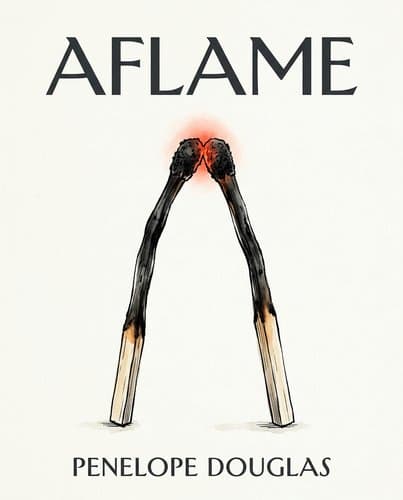
23437291_aflame
by Penelope Douglas
Chemistry without honesty costs years—Jared and Tate's story exposes how protection becomes control, how sabotage masquerades as self-defense, and why…
In Brief
Aflame (2015) is a new adult romance that examines what it takes to rebuild a relationship damaged by control, cruelty, and emotional dishonesty. Through the reunion of two longtime antagonists, it explores how early bonds survive years of harm, and what genuine repair — beyond chemistry and grand gestures — actually requires from both people.
Key Ideas
Growth makes returning to painful people possible
Returning to someone painful isn't always self-destruction — sometimes it reflects a bond formed before you had the vocabulary for it, and the real question is whether both people have done the work to make it different this time.
Safe relationships can mask existing wounds
'Safe' relationships can be a symptom of old damage: if you're choosing someone specifically because they don't challenge or surprise you, ask whether you're protecting yourself or just managing the risk of feeling anything.
Dishonesty in unreadiness creates lasting damage
The gap between wanting someone and being ready for them is where most of the damage happens — Jared knew he loved Tate and still couldn't be honest about why he was leaving, and that dishonesty cost them both years.
Shielding others removes their agency entirely
Protectiveness and control can be the same gesture wearing different clothes. Standing in front of someone — shielding them, deciding what they can handle, making sacrifices without asking — is still choosing for them.
Sabotage is rational defense against vulnerability
Sabotage before vulnerability is a rational defense: making someone fail you is less terrifying than trusting them and being wrong. Recognizing which one you're doing is the first step toward actually letting someone in.
Repair requires consistency over grand gestures
The work of repair isn't a grand gesture — it's a mother's rebuke absorbed honestly, a midnight climb through a window, a shared paint job, and the willingness to refuse sex until the emotional commitment comes first.
Who Should Read This
Readers interested in Novels and Relationships, looking for practical insights they can apply to their own lives.
Aflame
By Penelope Douglas
11 min read
Why does it matter? Because the person you keep returning to might not be a bad habit — they might be the one relationship where leaving actually felt like losing yourself.
We tell ourselves returning is weakness. That going back to someone who hurt you is just dressed-up self-destruction, a failure of nerve disguised as love. But that theory assumes the relationship was something you chose freely, something you could simply unchoose. What if it wasn't? What if the bond formed before either of you was old enough to know what bonds even were — at eleven, at fourteen, in the backyard, in the dark, with grief and cruelty and loyalty all tangled together? Aflame is about two people who have been each other's north and damage and home for so long that separation doesn't heal anything — it just reveals what was always underneath. The question Penelope Douglas actually asks isn't whether Tate and Jared should be together. It's whether people can dismantle who they became and rebuild from what they were before the wounds started.
Some Bonds Are Built Before You Know What Love Is
It's three weeks before graduation when Tate leads Jared through the darkened school building and stops at the girls' locker room door. Not past it. At it. This is where, the previous fall, he had cornered her in nothing but a towel — cleared out her teammates, issued threats, let students photograph the humiliation. She grabs his hand and walks him back to the exact spot, presses herself against the lockers the way he once pressed her, then climbs up on the bench so she's above him, both arms caging his head against the metal. She whispers his old words back at him verbatim. He begs. She melts. She always melts.
The easy read is unresolved desire — two people who fought so hard they broke something, who can't stop circling the wreckage. But the prologue is doing something more specific than that. Jared didn't randomly pick Tate as his target during three years of high school cruelty. She was his best friend first, from childhood. When his father turned abusive and his mother disappeared into the bottle, Tate was the person who represented safety — and then, in his fractured thinking, the person who had abandoned him too. He tormented her because she was everything, and he needed somewhere to put all the pain of people who were supposed to stay and didn't.
By prom night, they've repaired it. But repair isn't the same as resolution. Tate tells us the attachment isn't something she chose so much as something she found herself already inside — the way you don't choose the smell that always means home. Four years later, living in California, she can still recall exactly what his body wash smells like. When she's kissing someone else, her pulse stays flat. The memory of Jared is more electric than any present-tense man in the room. That's not nostalgia for a relationship. That's someone discovering that a piece of their own identity was knitted into another person before either of them had the vocabulary for what that meant.
'Safe' Is Another Word for Someone You Don't Actually Want
The clearest evidence of how badly Jared broke Tate isn't anything she says about him. It's Ben. She's been seeing him for six weeks, knows he'll follow her to New Jersey if she lets him, and has noticed exactly one thing about their relationship that she likes: she never has to brace herself. He doesn't challenge her, doesn't anger her, doesn't push sexually or emotionally. She describes controlling the relationship as a relief. She uses the word 'safe' the way someone uses it after a car accident, not a love story. What Tate has built with Ben isn't a relationship she wants. It's a controlled environment where nothing can go wrong, because nothing's actually at stake.
Pasha, Jared's assistant, reads this from the passenger seat during a race — Tate has known her for approximately twenty minutes — and lands it cleanly: Ben is a lifeline, something to grip so you don't go under. The word stings because it's accurate. You hold a lifeline when you're drowning, not when you're living.
The damage underneath this arrangement surfaces when Tate is kissing Ben and her mind pulls her elsewhere — to Jared pressing her against a wall in a school corridor, his hands certain and possessive, her breath gone. She comes back to Ben's cologne and feels the distance between a man who smells like product and a man whose specific scent she can conjure four years later from a different state. The comparison just arrives. She just built a very quiet room on top of it and calls it recovery.
He Left to Become Worthy of Her and Arrived to Find Her Gone
Jared sits in a chair by Tate's window at dawn, watching her chest rise and fall, memorizing the way her lips move while she sleeps. His duffel bag is already packed at his feet. He knows that in a few minutes, when her phone lights up with a text from Jax and Juliet landing safely in New Zealand, everything will come apart. What he tells her is that he can't breathe. What he means — the thing he can't say out loud — is that he's twenty years old, he hates school, he hates his apartment, he has no idea what he wants from his life, and he cannot stand the daily indignity of watching her move forward while he stands still. His pride won't survive being the deadbeat boyfriend she comes home to. So he leaves, convinced he'll be back in a year, certain she'll wait. He actually needs only six months. Six months turns out to be too long.
He comes back ready to claim her. He stands outside her lit bedroom window in the dark — still carrying the small clay thumbprint charm she pressed for him as a kid, still wearing it on a ribbon around his neck — and watches her dancing with someone else. Slow, laughing, arms around a guy named Gavin from her study group. She's smiling the way she used to smile at Jared. He had stayed celibate the entire six months, holding out. She waited roughly none of them. He kicks the window in, shatters the glass, and drives back to Chicago without speaking to anyone. He tells himself he's letting her go. He doesn't. The charm stays around his neck for two more years.
The gap between Jared's intentions and his timing is where the tragedy actually lives. He left because he loved her enough to know what a diminished version of himself would do to her. That's not nothing — it's the most self-aware thing he'd done in years. But love and readiness are not the same calendar. He became the man he thought she deserved, built a business, found his footing — and by the time he looked up, she had done the necessary, brutal work of trying to survive his absence. Both wounds were real. The tragedy is that the healing didn't sync.
The Man Who Sends Flowers to Her Dead Mother's Grave and Flushes Her Condoms the Same Week
Jared finds Tate's condom box on the bathroom counter during his first hour back in town. He knows, with absolute clarity, that they aren't together, that she's free, that he has no claim. He says all of this to himself in almost exactly those words. Then he empties the box into the toilet and flushes. The whole internal monologue — the reasonable, self-aware version of Jared — takes maybe ninety seconds. The flush takes one. He grew up watching a man impose his will on everyone in arm's reach and call it love. He spent his adolescence doing a version of the same thing to Tate. By twenty-two he can describe the pathology clearly. He just can't stop.
A few chapters later, Pasha — his assistant — is standing in Tate's garage when she glances at a family photograph and lets something slip. Jared has her send flowers to Tate's mother's grave every April fourteenth. Every year. Without telling anyone. Tate goes motionless. Juliet tears up. Pasha immediately asks them not to say anything, because, she explains, he'll complain about it and she'll have to hear it.
That last detail does more work than the flowers themselves. A man performing tenderness for an audience doesn't make it a secret and then grumble about being exposed. This was never for Tate to discover. It was just something he did, year after year, because the grief was real to him and he had no other language for it.
You can't settle the question of who Jared really is by picking one of these scenes and discarding the other. The flushed condoms and the grave flowers come from the same source: an attachment so consuming it doesn't distinguish between care and possession. The novel is honest enough not to resolve that too quickly, and honest enough to make you feel both versions in your chest before you're asked to decide what you think about it.
Standing in Front of Someone Is Just Another Way to Block Their View
What does it mean when a man says he's protecting you? For years, Jared would have pointed to the same evidence: he shielded Tate from fights, stepped in front of danger, made sure nothing got through to her that he hadn't vetted first. That reads as devotion. His mother sees it differently.
She catches him alone in a dark room after he's cornered Tate at a party — backed her against a wall, forced the confrontation — and she doesn't soften the verdict. She traces the pattern back to when they were eleven, when all Jared had to do was hook an arm around Tate's neck and steer her wherever he wanted, and she'd follow. He called that friendship. He called the standing-in-front-of-danger love. His mother calls it the same thing: control with different packaging. Then she hands him the line that stops him breathing — a man who positions himself in front of a woman isn't protecting her view. He's blocking it. What Tate actually needs is someone beside her, not someone who decides what she gets to see.
Jared doesn't argue. He recognizes it. And that recognition lands him at the one question that actually matters: whatever happened to the boy who was simply her friend?
The answer is what drives him, later that same night, out a bedroom window and through the old tree connecting their houses — the same branches they climbed as children — into her room. He finds her awake and crying, devastated by news that her father is remarrying, afraid her mother will be slowly forgotten. He doesn't fix it. He presses his forehead to hers, puts her hand on his chest, and tells her he wants to be her friend forever, that if that's the only thing she'll give him he'll take it, because she's the only thing that makes his life feel like it's worth anything. Then he holds her until she sleeps.
No grand gesture.
She Bought Him a Lap Dance Because She Wanted It to Hurt
Tate is the one who buys the lap dance. She spots Piper — the woman who filmed her and Jared in bed and distributed it — performing onstage at the bachelor party, and something in her goes cold and deliberate. She calls Piper over. She hands her money. She points at Jared. This is a choice dressed up as punishment, and Fallon sees it immediately: you want him to fail you, she says. Tate corrects her with a precision that sounds like something she's been building toward for years. It's not about failure. She wants it to hurt. She tells Fallon — tells herself, really — that anger is easier than risk. That fury feels like standing upright. That judgment feels like strength.
And then Jared doesn't take the bait. He finds Tate in a dark hallway, not tangled up with Piper, and he's not sheepish or apologetic. He slams his fist into the wall and asks her if she really thinks he's nothing. Just that — nothing. The question lands somewhere Tate didn't expect. She'd spent years sorting herself and Jared into a moral ledger where she was the one who'd survived, which meant she was the one who was better. Standing in that hallway, she feels the ledger tip. The man in front of her, who refused to touch someone else's body when she practically staged the opportunity, is not the person she'd been arming herself against. She is the one who bought the dance. He is the one who walked away from it.
Go back to the porch the week before: Jared pulling her onto his lap on the motorcycle, both of them breathing hard, her asking him to come inside — and him saying no. Not because he doesn't want her. Because he wants something the body can't give him first. He puts his hand on her heart and tells her that's the thing he's after. Her heart before anything else.
Except he held the line twice. And Tate, standing in a hallway in a club, understands what she's actually been doing: not protecting herself, but rehearsing reasons to stay defended. Anger had been armor so long it started to feel like identity. What the novel has been building toward isn't Jared winning her back. It's Tate deciding, finally, to stop fighting someone who already stopped fighting her — and finding out that what's left, once the armor comes off, is the same thing that was there before either of them knew what to call it.
Neither Car Wins the Chicken Race — That's the Whole Point
Think about what a game of chicken actually tests. Two cars accelerating toward each other in a single lane — the winner is whoever refuses to swerve last, and the prize is getting to call the other person a coward. Except that framing only holds if you believe the point was ever the collision. Jared and Tate spend most of this series trying to win a crash. The final race strips that logic bare.
The race is a chicken run — one lane, two cars, closing fast. Somewhere in the last seconds, Jared calls her. He tells her he can't guarantee he'll operate at full capacity every morning, but he can promise she'll always come first. Then both of them swerve. Neither car wins. What that means is almost too simple to say out loud: the race they'd been running was never against each other. The moment they each stopped trying to outlast the other, they both came through it alive.
The wedding, three months later, is where the whole series says what it actually means. Jared threads Tate's ring onto her finger in stages, pausing mid-slide to work through a taxonomy of their entire history — friend, enemy, fighter, wife. Every earlier section of the novel lives in one of those first three categories: the childhood bond that formed before either of them could name it, the years of cruelty when love had nowhere to go but sideways, the long mutual war of pride and survival after he left. The ring slides the rest of the way on the word wife, which means the fourth category is the only one that's entirely chosen. You can't help who your first friend is. You don't exactly choose your enemies. But you decide, eyes open, who you fight for.
Tate's response names the thing she got wrong. Not that she loved him — she always loved him. What she got wrong was the direction of the energy. She spent years fighting with him when the fight should have been aimed at keeping him. She says this plainly, without drama: her one commitment going forward is making sure he always knows she's in his corner. After everything the novel has moved through — the humiliation she survived, the year and a half he carried an engagement ring he couldn't give her, the long accumulated damage of two people who learned early that closeness could destroy you — what she offers at the end isn't a grand gesture. It's a reorientation. Same intensity. Different target.
Love forged in childhood grief and adolescent cruelty doesn't automatically disqualify itself. But it can't survive if the people inside it keep pointing it like a weapon at each other. Both of them had to swerve first. The miracle is that they did it at the same moment.
The Ring That Waited a Year and a Half
A year and a half before he proposes, Jared makes the trip, has the conversation with her father, and comes home with a ring he can't give her yet. She's unavailable — in every sense — so he leaves it with his brother. He doesn't throw it away. He doesn't put it back. He just leaves it somewhere safe and waits.
The question was never whether Jared and Tate belonged to each other. It was whether two people who learned, very young, that closeness was a form of danger could eventually stop pointing it like a weapon at the one thing they couldn't live without. The miracle — the only ending that earns itself — is that they got there. And when they did, the ring was still with his brother, right where he'd left it.
Notable Quotes
“he said, and the shaky breath sounded like he was almost crying. Jared. I stilled, sucking in short breaths through his fingers as he set me down. His threatening whisper was filled with pain.”
“I knew the minute you walked into the club,”
“I was amused. I actually thought you were jealous.”
Frequently Asked Questions
- What is Aflame about?
- Aflame (2015) by Penelope Douglas is a new adult romance examining what it takes to rebuild a relationship damaged by control, cruelty, and emotional dishonesty. The novel follows two longtime antagonists reuniting to confront whether early bonds survive years of harm and whether both people have done the work to make it different this time. It explores how genuine repair requires far more than chemistry and grand gestures—it demands emotional honesty, vulnerability, and mutual willingness to change.
- Is returning to someone painful always self-destructive?
- Returning to someone painful isn't always self-destruction — sometimes it reflects a bond formed before you had the vocabulary for it, and the real question is whether both people have done the work to make it different this time. In Aflame, two people with deep history must decide whether damage has been healed or merely buried. The novel suggests the answer depends entirely on whether each person has genuinely transformed, not on the fact of returning itself.
- What does Aflame reveal about control in relationships?
- Protectiveness and control can be the same gesture wearing different clothes. Standing in front of someone — shielding them, deciding what they can handle, making sacrifices without asking — is still choosing for them. In Aflame, this pattern emerges as one character attempts to protect another, unaware that sacrifices and shielding constitute control that denies agency. The novel illustrates that good intentions don't guarantee ethical behavior, and genuine love requires allowing someone to make their own choices, even risky ones.
- What are the key takeaways from Aflame?
- Aflame's core message is that relationship repair isn't a grand gesture — it's a mother's rebuke absorbed honestly, a midnight climb through a window, a shared paint job, and the willingness to refuse sex until the emotional commitment comes first. The novel emphasizes that the gap between wanting someone and being ready for them is where most damage happens, that sabotage before vulnerability is a rational defense, and that safe relationships can reveal unhealed trauma. True repair requires sustained emotional work.
Related Book Summaries

Read the full summary of 23437291_aflame on InShort