44028717_simple-tips-smart-ideas
by Erica Wolfe-Murray
Marketing to everyone means reaching no one — discover how naming your ideal customer, writing to her specific fears, and tracking the right metrics turns…
In Brief
Simple Tips Smart Ideas: Build a Bigger, Better Business (2019) gives small-business owners a practical marketing playbook built on focus and consistency. It shows how to define a precise target customer, use social media strategically rather than noisily, and measure the metrics that actually predict revenue — so every hour spent on marketing converts into real business growth.
Key Ideas
Build Named Persona, Filter Decisions
Build a named persona — give her a job, two kids, a fear, a budget, and a rough sketch pinned where your team can see it. Before publishing any post, ask: 'Is Karen interested in this?' If the honest answer is no, rewrite it.
Keywords in Profile, Not Brand
On Instagram, put a keyword phrase in the 'Name' field instead of your business name. Strangers search by category ('small business bookkeeper'), not by brand — especially if they've never heard of you.
Create Posts From Customer Problems
For any product or service, write out six problem scenarios your customer faces. Each scenario is a post targeting a different segment of your audience. You never need to mention features at all.
Track Engagement Rate, Ignore Followers
Stop tracking follower counts. Track engagement rate (likes + comments + shares + clicks, divided by impressions) and click-throughs to your website — those are the numbers that predict actual revenue.
Layer and Test Hashtag Strategy
Layer hashtags in every post: one branded tag, several industry tags, and a few post-specific tags. Check Instagram Insights to see what percentage of your views came from hashtag searches, then keep what's working and rotate the rest.
Weekly Marketing Blocks, Six Months
Block one dedicated marketing session into your calendar every week and hold it. Commit to six months before evaluating whether the strategy is working — consistency over time is the entire mechanism.
Complete Pre-Publish Quality Control Audit
Run a 'what not to do' audit before going live: test every contact link, read your copy aloud to catch jargon, check that you're responding to every comment, and make sure no automated messages are firing with wrong names.
Who Should Read This
Business operators, founders, and managers interested in Marketing and Branding who want frameworks they can apply this week.
Simple Tips Smart Ideas: Build a Bigger, Better Business
By Erica Wolfe-Murray
8 min read
Why does it matter? Because the assumptions most business owners bring to social media are completely backwards.
The instinct when you decide to "do social media" is to post more: more often, more platforms, more reach. It feels like action. This book argues it's almost exactly wrong.
The first move isn't creating anything. It's shutting up — scrolling with genuine curiosity, noticing what your customers actually complain about, and building a detailed picture of one specific person before you write a single word. Take a locksmith. Before, her posts were the usual: "licensed and insured," "24/7 emergency service," call us anytime. She was talking to everyone. Once she narrowed in on first-time homeowners panicking about rekeying after closing day, she stopped competing with six other locksmiths in the feed. She became the only obvious choice for that one person — someone who already trusted her before they'd ever called. What follows is a sequence that makes the whole project feel less like guessing: you build a person, find a niche, listen, create, measure, and do it again. It's slow. But it compounds.
Most Business Owners Are Marketing to Themselves Without Knowing It
Picture your first professional networking event — the kind where generating business is the whole point. A stranger approaches. They could open with: "We offer three marketing packages, free consultation included, here's my card!" Or they could say: "Hi, I'm Sarah — great to meet you. What brings you here tonight?"
Nobody picks the first option. In person, the hard sell on first contact feels absurd. But on social media, where the distance feels abstract, business owners do exactly this: posting features, promotions, and announcements at an audience they've never actually listened to. The platform is different; the dynamic isn't.
Most of them get there the same way. They create content they would enjoy reading, assume that's good enough, and hit publish. The result is a monologue directed at the mirror.
Listening comes before everything else — to the market, to competitors, and above all to the specific person you're trying to reach. Storytelling matters, but it's second. Get the order wrong and all that carefully crafted content lands in front of people who never needed it.
The fix starts before you write a single word. Look at your existing customers — their ages, jobs, how they found you — and find the pattern. Then build one detailed profile of your ideal customer: give her a name, a job, a schedule, a fear. Suddenly you can test every post against a real person: does this speak to her life, or yours?
A Named Customer With Two Daughters Beats a Target Demographic
Picture a personal trainer who has been posting content for six months without much to show for it. The posts look fine: motivational quotes, before-and-after photos, a few tips on form. Engagement is thin.
Then she sits down and builds a customer profile. Not "women aged 35–50 in the local area." A person. Her name is Karen. She's in her early forties, works part-time, and has two young daughters who eat most of her schedule. She follows outdoor fitness accounts on Instagram but hasn't exercised in two years. She wants to start again, but there's a fear she's never said aloud: she worries she'll hurt herself. She's not twenty-three anymore.
That one detail — the unspoken fear of injury — changes everything about how the trainer posts. Before Karen, the content was exciting to the trainer herself: heavy lifts, competition prep, transformation photos. After Karen, she knows that intensity is the wrong register entirely. Her audience needs reassurance before they'll pick up the phone.
So the copy stops selling fitness and starts dismantling an objection: "Build your strength gently and efficiently with our supportive and qualified trainers. We work with your pace." Karen reads that and feels understood rather than intimidated. She books.
The persona also generates ideas the trainer hadn't considered. Karen can't make a 6am class; school drop-off is non-negotiable. An after-hours slot, maybe with childcare arranged, removes a barrier Karen never would have emailed to explain. A beach bootcamp appeals because Karen gravitates toward outdoor activities, not gym floors. None of this required market research. It came from spending an hour fleshing out one fictional person and then asking: what would actually work for her?
There's a structural payoff that's easy to miss. Once you have Karen on paper (her schedule, her fears, her budget), a niche practically draws itself. The trainer isn't competing with every gym in town. She's the trainer for time-poor mothers in their forties who are nervous about starting again. That sentence is specific enough that the right Karen feels it was written for her. The wrong Karen self-selects out. That's not a loss — that's efficiency.
An accountant who markets as "Accounting Experts for Dental Professionals" doesn't need to list qualifications. The positioning already answers the question every dental client was going to ask: does this person know my world? Same mechanism, different domain.
Once you have Karen, the content calendar, which used to feel like a blank canvas, becomes something closer to a logbook of her week.
To Fill Your Content Calendar, Describe Your Customer's Problem — Not Your Product's Features
It's 8:47 on a Tuesday and you're standing in a café queue that won't move. Your nine o'clock meeting is downtown. The barista is new and struggling. You're going to be late, and the coffee you eventually get will be mediocre, and you'll have paid four dollars for the privilege of knowing that.
Now imagine a company that sells vacuum-insulated travel mugs. Their content team could write a post about double-wall construction or the twelve available colors. They could explain the technical brilliance of the leak-proof lid.
Or they could describe that Tuesday morning.
Forget the features. Ask instead: in what specific moment did your customer wish they had your product? Then generate a different scenario for each kind of customer. The person who's late because of a slow queue. The commuter whose fingers are too cold to function on a winter platform. The person who got handed a burnt coffee by someone new on the machine. The one who spilled from a flimsy paper cup onto a white blouse. The lactose-intolerant customer who can never find the right milk at the café down the road. The person who takes twelve sugars in their tea and is too embarrassed to say so in public.
That's six posts from one product. Each one has a different person reading it and thinking: that's me. The product appears nowhere in the post — only the feeling of needing it.
Take an IT support company. They post a photo of a coffee cup on a dark desk, taken at some ungodly hour, monitor glow catching the steam. Caption: This is what 3am feels like when your server goes down. We pick up at 3am. No mention of support contracts or response times. Just a moment the customer knows, and the quiet reassurance that someone else is awake for it.
Content calendars feel daunting when you approach them as a blank creative canvas. They stop feeling daunting the moment you treat them as a log of your customer's day — the small irritations, the close calls, the moments they realized something needed to change. Your job isn't to invent. It's to notice.
Ten Thousand Silent Followers Are Worth Less Than One Hundred Who Click
Say you've been posting for Karen for three months. What's the number you're checking first? Probably the follower count — it's right there on the profile, visible to anyone, and it feels like the scoreboard. But it's almost certainly the wrong number to care about.
Imagine two businesses: one with ten thousand followers, the other with a hundred. The first looks successful by every conventional measure. But if none of those ten thousand people ever click through to the website, pick up the phone, or buy anything, the number is decorative. The second business, a hundred followers, has a different-looking profile. If those hundred people are engaging with posts, clicking through, and converting into customers, they're doing all the work the ten thousand are not.
A hundred engaged followers puts you on a better path to conversion than ten thousand silent ones.
The shift is simple but most people skip it: stop announcing, start asking. Think about Johnny, who owns a café and posts a coffee tip every Tuesday. Version one: "A French press needs water at 94°C for the best extraction." True. Helpful. Dead on arrival. Version two: "Our Tuesday tip — we pull our espresso a second shorter in summer because the heat makes beans taste more bitter. Who else does this? What's your hot-weather trick?" Same knowledge. One invites a thread; the other gets a double-tap and a scroll.
Platforms reward the second version because conversation keeps people on the app longer. Instagram, Facebook, LinkedIn all push posts that generate replies further than posts that simply declare something. The content can be identical. The framing determines whether it circulates or sits still.
Replying to comments, answering questions in the thread, engaging back when someone tags you — none of this feels like marketing, which is probably why it gets skipped. But the platform reads all of it as activity worth rewarding, and the person who has been watching the conversation for months is far more likely to book when they're finally ready. They've seen you in it. They know how you think.
The number to track isn't how many people follow you. It's how many of them moved — clicked, replied, shared, booked. Scale without that movement is furniture.
Digital Marketing Is a Plant, Not a Campaign
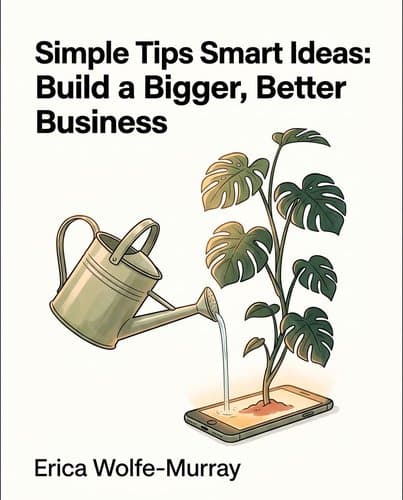
Twelve months ago, someone gave the authors a Monstera Deliciosa — the Swiss Cheese plant, named for the holes that form in its leaves. It has since grown so aggressively it's threatening to colonize the kitchen. The secret? Nothing dramatic. Consistent watering. Occasional sunlight. No emergency interventions, no anxious repotting to check whether the roots were doing something wrong. Just reliable, unremarkable care over time.
Digital marketing works the same way. The temptation — especially in the early weeks, when posts are getting seven likes and three of them are from your cousin — is to conclude that something is broken. The strategy isn't working. The content is wrong. Maybe social media isn't for this particular business. So you change everything: new format, new platform, different posting time, shorter videos, longer captions. Nothing has had time to root yet. You're repotting a seedling that was perfectly healthy.
The timeline is at least six months before results become visible in any meaningful way. Not six weeks. Not six posts. The process builds slowly (audience familiarity, trust, top-of-mind awareness) and then it compounds. Your follower who left a comment eight months ago and has been quietly watching ever since is now ready to hire a real estate agent. Yours is the first name she thinks of.
There's also a list of ways to undo months of patient work in one move. Think about Karen, who has spent three months watching your posts, warming up slowly, finally ready to reach out. She clicks through to your website. The contact form throws an error. She closes the tab. That's it. Broken links do this. So does jargon that makes readers feel slow, automated messages that get her name wrong, scheduling that runs on autopilot while you go quiet for weeks. Every one of them signals the same thing: the business behind the account wasn't paying attention. People who aren't quite ready to buy are especially sensitive to that.
The fix is the same as the plant. Show up consistently. Reply. Check what's growing. Six months from now, you may find the brand has taken on a life you didn't expect.
The Question Worth Carrying Forward
Most of your followers don't need a dog walker, a bookkeeper, or a personal trainer today. But six months from now, one of them will — and in that moment, they'll reach for whoever feels familiar. Not the loudest account. Not the one with the biggest number on its profile. The one that talked about problems they recognised, replied when they left a comment, and showed up often enough to feel like a known quantity. Before you post anything this week, spend five minutes on this: is every contact link working? Are you writing for Karen, or for yourself? Have you replied to every comment from the past seven days? Any automated message firing with the wrong name? If you bought followers at any point, accept that they won't convert — you can't water a plastic plant back to life.
Notable Quotes
“Basic Formatting Tips for Word”
“Integrating your software to work more efficiently is all about seeing GROWTH in your business.”
“Time is precious. Don't waste it getting frustrated with your laptop! Outsource those tasks you are not so passionate about and enjoy the extra time.”
Frequently Asked Questions
- What is Simple Tips Smart Ideas: Build a Bigger, Better Business about?
- Simple Tips Smart Ideas provides small-business owners with a practical marketing playbook centered on focus and consistency. The book teaches how to define a precise target customer, use social media strategically, and measure metrics that predict revenue. Rather than spreading efforts across numerous channels noisily, Wolfe-Murray shows how marketing efforts should convert directly into business growth. The 2019 guide emphasizes understanding your specific customer and their needs before creating content. By replacing vanity metrics with meaningful engagement data and committing to consistent weekly marketing sessions, small business owners can build sustainable growth grounded in real customer connection rather than random activity.
- How should I define my target customer?
- Build a named persona by giving her specific details: a job, two kids, a fear, a budget, and create a rough sketch to pin where your team can see it. Before publishing any post, ask: "Is Karen interested in this?" If the honest answer is no, rewrite it. This tangible representation of your ideal customer becomes your decision-making filter for every marketing action. Rather than creating generic content for a broad audience, every decision targets one specific person's needs and concerns. This focused approach replaces unfocused content with material that genuinely resonates with your actual target market and drives engagement.
- What metrics should I focus on for social media marketing?
- Stop tracking follower counts entirely — they don't predict revenue. Instead, track engagement rate (likes + comments + shares + clicks, divided by impressions) and click-throughs to your website — "those are the numbers that predict actual revenue." Additionally, use Instagram Insights to discover what percentage of views came from hashtag searches, then keep what's working and rotate the rest. Layer hashtags strategically with one branded tag, several industry tags, and post-specific tags. These measurable engagement metrics directly connect to business outcomes, unlike vanity metrics that look impressive but don't drive conversions or sales.
- How consistently should I commit to my marketing strategy?
- Block one dedicated marketing session into your calendar every week and hold it as non-negotiable time. Crucially, "commit to six months before evaluating whether the strategy is working — consistency over time is the entire mechanism." One week provides insufficient data to assess effectiveness, but six months of steady effort reveals genuine patterns and results. This doesn't require spending all day on marketing, but rather protecting regular, focused time slots consistently. The approach depends entirely on sustained effort over time rather than sporadic bursts of activity, building credibility and sustainable revenue growth.
Related Book Summaries
Read the full summary of 44028717_simple-tips-smart-ideas on InShort