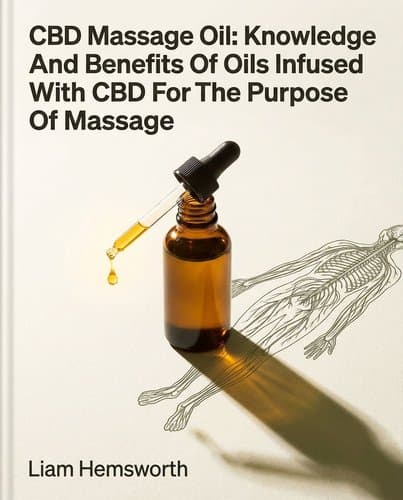
52818313_cbd-massage-oil
by Liam Hemsworth
Cannabis compounds attack cancer through specific, documented biological pathways—yet they remain unapproved not because the science fails, but because…
In Brief
Cannabis compounds attack cancer through specific, documented biological pathways—yet they remain unapproved not because the science fails, but because regulation does. Learn exactly how to source, evaluate, and use CBD oils so the molecular science actually works in your body.
Key Ideas
Supercritical CO2 extraction prevents harmful residue
Prioritize supercritical CO2 extraction when buying CBD oil. Solvent-extracted oil (butane, ethanol, grain alcohol) leaves residue that scientists and doctors warn can worsen existing health conditions — not just reduce therapeutic value, but actively harm.
Verify independent lab results across production steps
Request lab analysis at each production step from the manufacturer or dispensary, not just the final label. Certification from the grow facility should confirm pesticide-free status independently of what the packaging claims.
Oils and tinctures maximize therapeutic cannabinoid absorption
For therapeutic use, ingestible oils and tinctures achieve the highest active cannabinoid levels in the body. Edibles deliver only 4–12% bioavailability and are the least medically effective method despite feeling the most potent.
CBD-to-THC ratio matters more than percentage
Evaluate CBD oil by ratio, not percentage alone. A 27% CBD concentration at a 10:1 CBD-to-THC ratio is weaker than a lower percentage at a tighter ratio — the THC component affects how CBD performs.
CBD and THC combination exceeds either alone
Don't dismiss THC if therapeutic benefit is the goal. Multiple independent studies found CBD and THC together outperform either compound alone — the 'CBD good, THC bad' framing contradicts the synergy the research actually documents.
Fat-soluble cannabinoids need lipid carriers
Cannabinoids are fat-soluble. Oils combined with coconut oil or MCT (medium-chain triglycerides) absorb faster and more efficiently than formulas without a lipid carrier — look for this on the ingredient list.
Anti-cancer evidence remains preclinical, not conclusive
The anti-cancer evidence in this book is almost entirely preclinical — cell cultures and animal models, not completed human clinical trials. The mechanism research is serious and institutionally funded, but human trial confirmation remains limited. Use it to inform a conversation with a physician, not to replace one.
Who Should Read This
Readers interested in Nutrition and Fitness, looking for practical insights they can apply to their own lives.
CBD Massage Oil: Knowledge And Benefits Of Oils Infuѕеd Wіth CBD For The Purpose Of Massage
By Liam Hemsworth
10 min read
Why does it matter? Because the research has already happened — and it doesn't say what the wellness industry does.
You pick up a book about massage oil expecting lavender vibes and vague wellness promises. What you find instead is a named scientist in a Madrid laboratory watching glioma cells die on contact with a plant compound nobody in oncology was tracking. Then another scientist in San Francisco, backed by NIH grants and a DEA license, identifying the specific gene that cannabidiol switches off — the same gene that reactivates in dozens of aggressive cancers. The wellness label is accurate but it's the wrong frame. The book's real subject is why five plant compounds, each operating through a distinct molecular mechanism, are sitting outside the pharmaceutical approval system while the evidence keeps accumulating.
Your Body Was Already Running a Cannabinoid System — Cannabis Just Plugs Into It
Your body has been running cannabinoid receptors for as long as you've been alive. That's the thing most people miss when they encounter CBD: they treat it as a substance the body tolerates, when the picture is almost the reverse. The body built the infrastructure. Plant cannabinoids fit into it.
Here's what the science actually found. In 1990, Lisa Matsuda at the National Institute of Mental Health isolated the CB1 receptor, concentrated in the cerebellum and neocortex, the brain regions governing movement, pain recognition, emotion, memory, and hunger. Three years later, a team at Cambridge University identified its counterpart, CB2, found primarily throughout the immune system (the spleen, tonsils, thymus) and in particularly high density along the gastrointestinal tract. Two distinct receptor systems, each with its own anatomical address and functional domain.
The most striking discovery came between those two. In 1992, Raphael Mechoulam's team at Hebrew University identified anandamide, a substance the brain manufactures on its own that binds naturally to CB1 receptors. The body hadn't been waiting for cannabis. It had already been producing its own version of the signaling molecule.
That single finding reframes everything. The endocannabinoid system is a pathway the body built, for its own regulatory purposes, that plant-derived cannabinoids happen to fit. THC, CBD, and the rest are molecular keys to locks the body already installed. When you take CBD oil, you're joining a conversation the body is already running.
The receptor map matters more than the compound list. The anatomy explains the pharmacology. Where the receptors live tells you exactly where and why these compounds land — and that principle holds across every system cannabinoids touch.
One Girl's Seizures Stopped After Her First Dose — and the Industry Never Recovered
Charlotte Figi had her first seizure at three months old. By the time she turned five, Dravet Syndrome, a severe form of epilepsy, was giving her hundreds of convulsions a week. Standard medications had failed. Her parents were out of options.
Then someone suggested cannabis oil.
After her first dose, the seizures dropped immediately. Not over weeks of titration, not after months of adjusting — immediately, after one dose. The physicians tracking her couldn't ignore it. The high-CBD cannabis strain developed for her was named after her: Charlotte's Web. She became known as "the girl who is changing medical marijuana laws across America."
That might have stayed a local story, circulating among specialists, except CNN picked it up. The 2013 documentary "Weed" broadcast Charlotte's case to a national audience. The effect on demand was immediate and overwhelming. Supply of high-CBD products couldn't keep pace. The cannabis industry responded by breeding entirely new strains engineered for higher CBD-to-THC ratios: an agricultural pivot that traced back directly to one child's response to one dose.
Charlotte wasn't the first data point. GW Pharmaceuticals had started cultivating cannabis for scientific research in England in 1998. Co-founder Geoffrey Guy was convinced that purified CBD from cannabis would produce real medicine. His team's clinical work bore that out: a 2017 trial of 120 Dravet Syndrome patients, published in the New England Journal of Medicine, found CBD cut convulsive-seizure frequency by 39%, against 13% for placebo. The institutional case was building years before CNN arrived. What it lacked was a face the public could recognize.
Charlotte provided that. She connected an abstract pharmacological finding to a specific five-year-old whose suffering was measurable and whose improvement was documented on camera. That combination — named institution, controlled trial, verifiable personal outcome — is what moves an industry. And in 2013, it did. What the coverage didn't reach is that cancer researchers had been asking a harder question about CBD for fifteen years.
CBD Found the Gene That Makes Cancer Spread — and Turned It Off
Charlotte's case proved the receptor system responds; cancer researchers were already probing a different mechanism.
In 1998, a research team at Complutense University in Madrid was studying cell metabolism, not cancer. Cristina Sanchez and her colleagues were tracking what THC does to cell activity. What they found instead stopped them cold. When glioma cells (the aggressive brain tumor cells behind glioblastoma) came into contact with delta-9 THC, the cells triggered their own programmed death sequence and shut down.
That accidental result in Madrid launched a chain of inquiry that reached Pacific Medical Center in San Francisco, where Sean McAllister had spent a decade asking a harder question: not whether cannabinoids could affect cancer cells, but exactly how.
His answer came down to a single gene: ID-1. During fetal development, ID-1 is active, directing cell growth as the body takes shape. At birth, it switches off. In a healthy adult, it stays dormant. But in cancer, it reactivates. When ID-1 turns back on, it drives cells to mutate, multiply without stopping, and break off to colonize other parts of the body: proliferation and metastasis, the two processes that turn a localized tumor into a systemic threat.
McAllister, backed by NIH funding and operating under a DEA research license, discovered that CBD switches the gene back off. Introduce CBD to a cancer cell with an active ID-1 gene and the gene goes quiet. The cells stop spreading. He noted: "Dozens of aggressive cancers express this gene" — meaning the mechanism isn't limited to one tumor type. His conclusion was direct: CBD could offer a non-toxic treatment for aggressive cancers without the systemic damage that makes chemotherapy so debilitating.
If you've thought of CBD mostly as a pain or nausea aid (something that makes cancer easier to endure), the ID-1 discovery suggests a different category entirely. CBD may act directly on the molecular mechanism that makes cancer spread, silencing the specific gene responsible rather than managing what the disease does to the patient.
Sanchez's in-vitro finding fed directly into a clinical trial in Madrid: nine glioblastoma patients who had already exhausted standard treatment were given THC. All nine responded positively. That's a small cohort, but a striking one: every patient showed some benefit, none with anywhere else to turn.
The honest summary: the research positions cannabinoids as participants in cancer biology, acting through specific, named molecular pathways. The case for cure isn't made. The case for direct molecular engagement with cancer — at the gene level — increasingly is.
The Same Pattern Appeared in Spain, London, San Francisco, and Tokyo — Without Any of the Teams Talking
What separates a single lab's interesting result from something worth acting on? In medicine, the answer is replication — the same finding arriving from independent teams who weren't looking for it.
In 2008, a Spanish team led by Cristina Blázquez was studying glioblastoma cells (the brain cancer tissue that Sanchez had watched self-destruct when THC was introduced a decade earlier). Blázquez's team found something adjacent but distinct: THC made cancer cells worse at building blood vessels. Without a growing vascular network, a tumor can't sustain itself. They checked whether the same effect appeared in melanoma and carcinoma. It did.
McAllister in San Francisco was asking a different question at the same time: whether CBD could make chemotherapy more effective rather than replace it. He found that CBD reduced the dosage of first-line chemo drugs needed from toxic levels to manageable ones, not additive but synergistic, less drug producing more effect. A team at St. George's University in London reached the same conclusion working independently with leukemia drugs.
Then researchers at Daiichi University in Tokyo found that cannabidiolic acid (the raw, unheated precursor to CBD in unprocessed cannabis plants) stopped aggressive breast cancer cells from migrating, the first such finding for that compound.
None of these teams were in communication. They were studying different cancers, different cannabinoids, different mechanisms. Spain found anti-angiogenic effects. San Francisco and London found chemo synergy. Tokyo found anti-migration effects in breast cancer. The overlap isn't a single dramatic finding. It's a pattern that keeps reassembling itself in different laboratories.
That's the shift. When one team finds something, you file it. When teams in Spain, the United States, Britain, and Japan independently find overlapping effects across unrelated cancers, the question changes from "did this work?" to "how, specifically, do we make this useful for patients?" And the first answer the evidence forces is uncomfortable — you need both compounds, not one.
The 'CBD Is Safe, THC Is Risky' Framework Is the Misconception the Research Most Directly Contradicts
The popular shorthand (CBD heals, THC intoxicates) isn't a simplification. It's a reversal of what the research actually shows.
The clearest refutation came from St. George's University in London, where a team was running cannabinoids alongside leukemia medications. Administered separately, both THC and CBD each improved the drugs' effectiveness. But when researchers added both compounds together with the same chemotherapy, the drugs reached what they described as maximum effectiveness, a result neither compound produced alone at equivalent doses. The compounds don't split the labor. They amplify each other.
That pattern runs through the research. The book names three cannabinoids with distinct anti-cancer roles: delta-9-THC, CBD, and CBDA (the unheated precursor found in raw cannabis). THC cuts off a tumor's blood supply. CBD silences the ID-1 gene that drives cancer cells to multiply and spread. CBDA blocks breast cancer cell migration. Each does something the others don't, and combinations consistently outperform single compounds in laboratory settings. Filtering out THC while keeping CBD means dismantling the mechanism that makes some of the strongest evidence possible.
CB2 receptors concentrate in the gastrointestinal tract, at the exact sites where Crohn's disease attacks, and cannabinoids achieve full remission in close to half of documented cases. Mid-chapter in the receptor biology section, after pages of anatomy, the book has one first-person sentence: diagnosed with Crohn's disease in 1983, personally using both CBD and THC oil for treatment, remission, and chronic pain relief. The author isn't reporting this from a distance.
If you've been selectively pursuing CBD while treating THC as the compound to avoid, you're working with one instrument from a three-piece set — and missing the one with the most direct evidence in cancer research.
The Compound in the Lab and the Compound in the Bottle Are Not the Same Thing
Think of it like pressing olive oil. The olives matter, but so does what happens next. Cold-press an olive and you get something with intact flavor compounds and documented health properties. Run the same olive through a chemical solvent to cut costs and speed the process, and you get oil that carries traces of that solvent in the final product. The bottle label reads "olive oil" either way.
CBD works the same way. The compound identified in research — the one that silenced the ID-1 gene in McAllister's San Francisco lab, that stopped breast cancer cells from migrating in Tokyo — exists in a specific form inside the plant. Whether it arrives in that form in the bottle depends entirely on how it was extracted.
The industry divides into two poles. At the top sits supercritical CO2 extraction: CO2 gas is frozen and compressed into liquid form, then pushed through cannabis plant material at high pressure and low temperature. When pressure releases, the CO2 evaporates back to gas, leaving nothing behind. No residue. The CBD that comes out is the CBD that was in the plant.
At the other end sits solvent extraction (butane, ethanol, grain alcohol), preferred by small-scale producers because it's cheap. The problem isn't theoretical: physicians working with immunocompromised patients advise against solvent-extracted oil for medical use, because the residue reduces the oil's therapeutic value and can actively worsen existing conditions. Patients with compromised immune systems, the most likely to be seeking CBD for serious illness, are also the most vulnerable to that residue.
That's where the research runs into the market. Every study on CBD's effects used purified, controlled compounds, not a bottle pulled from a shelf at a random price point. The gap between what the science tested and what most consumers buy is the extraction method.
The practical frame is simple. Before you purchase, ask for lab analysis at every production step, from cultivation through bottling. Look for a label stating CBD concentration and confirming no pesticides or solvents. If the extraction method isn't disclosed, treat that silence as the answer.
Edibles Are the Most Psychoactive Way to Take Cannabis — and the Least Effective Against Disease
Which method gets the most cannabinoids into your system? Most people would guess edibles. They produce the strongest effect, after all. The answer is the opposite of what that experience suggests.
When you eat a cannabis edible, the liver processes THC before it reaches the bloodstream. That step converts it into 11-hydroxy-THC, a metabolite four to five times more psychoactive than the original molecule. That's why edibles hit harder and last longer than smoking or vaping. But the conversion comes with a cost: only 4 to 12 percent of the cannabinoids in an edible become available to your body. The rest is eliminated before it can act. Edibles produce the strongest recreational effect of any delivery method and the lowest therapeutic yield.
Ingestible oils work differently because cannabinoids are fat-soluble, not water-soluble. When concentrated extract is dissolved in a fat-based carrier — MCT oil (a medium-chain triglyceride, a fat found in coconut oil) or plain coconut oil — the cannabinoids reach the bloodstream faster and in higher concentrations. That's why oils dominate medical use: they're the only delivery format confirmed to reliably achieve therapeutic cannabinoid levels.
The purest, best-extracted CBD oil in the world, consumed as an edible, still loses most of what's in it before it can act. The research consistently points to ingestible oils dissolved in fat: the only format built around how cannabinoids actually travel through the body.
What the Lab Confirmed That the Pharmacy Still Cannot Sell You
The regulatory asymmetry is worth naming precisely. The FDA has approved two cannabinoid pharmaceuticals: Marinol and Cesamet. Both treat nausea and appetite loss — the side effects of cancer treatment, not the cancer. The anti-proliferative research McAllister documented, Blázquez's anti-angiogenic findings, Tokyo's CBDA work — none of it sits inside that window. A physician cannot prescribe what independent, NIH-funded researchers have replicated across four countries. That is not a gap in the science. It is a gap between what the evidence says and what the approval structure permits you to receive.
Which puts the decision with you. The research is clear on one thing regulators haven't addressed: an unverified extraction method or the wrong delivery format means none of this reaches your body whatever the label says. The distance between what McAllister studied and what arrives in your bloodstream is extraction method and carrier oil. That part isn't waiting on the FDA.
Notable Quotes
“Dozens of aggressive cancers express this gene.”
“Cannabidiol offers hope of a non-toxic therapy that could treat aggressive forms of cancer without any of the painful effects of chemotherapy.”
“CBD represents the first nontoxic exogenous agent that can significantly decrease Id-1 expression in metastatic breast cancer cells leading to the down-regulation of tumor aggressiveness.”
Frequently Asked Questions
- What extraction method should I look for when buying CBD oil?
- "Prioritize supercritical CO2 extraction when buying CBD oil." Solvent-extracted oil (butane, ethanol, grain alcohol) "leaves residue that scientists and doctors warn can worsen existing health conditions — not just reduce therapeutic value, but actively harm." Additionally, request lab analysis at each production step from the manufacturer or dispensary, and ensure "Certification from the grow facility should confirm pesticide-free status independently of what the packaging claims."
- Which CBD delivery method delivers the highest therapeutic effectiveness?
- "For therapeutic use, ingestible oils and tinctures achieve the highest active cannabinoid levels in the body. Edibles deliver only 4–12% bioavailability and are the least medically effective method despite feeling the most potent." For medical applications requiring consistency and effectiveness, tinctures and oils remain the superior choice. This distinction is critical for therapeutic users who need to maximize active cannabinoid absorption compared to less effective delivery methods like edibles.
- Should I evaluate CBD oil by percentage or CBD-to-THC ratio?
- "Evaluate CBD oil by ratio, not percentage alone. A 27% CBD concentration at a 10:1 CBD-to-THC ratio is weaker than a lower percentage at a tighter ratio — the THC component affects how CBD performs." Additionally, "Cannabinoids are fat-soluble. Oils combined with coconut oil or MCT (medium-chain triglycerides) absorb faster and more efficiently than formulas without a lipid carrier" — verify this on ingredient lists for optimal therapeutic effectiveness.
- Does CBD oil have clinically proven anti-cancer benefits?
- "The anti-cancer evidence in this book is almost entirely preclinical — cell cultures and animal models, not completed human clinical trials." While "The mechanism research is serious and institutionally funded, but human trial confirmation remains limited." The work advises to "Use it to inform a conversation with a physician, not to replace one." Readers should approach anti-cancer claims cautiously and rely on established medical guidance rather than preliminary research.
Related Book Summaries
Read the full summary of 52818313_cbd-massage-oil on InShort