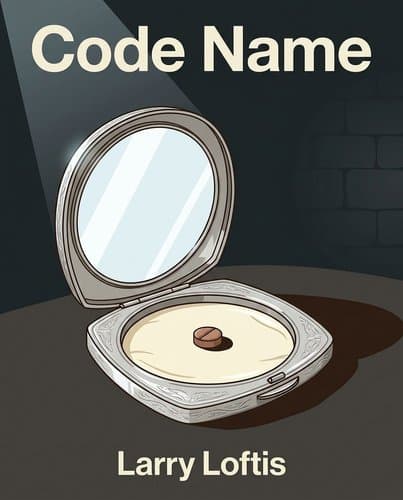
40539126_code-name
by Larry Loftis
The Gestapo had no playbook for a spy who genuinely believed she was nobody special—Odette Sansom's unshakeable self-described ordinariness made her immune to…
In Brief
The Gestapo had no playbook for a spy who genuinely believed she was nobody special—Odette Sansom's unshakeable self-described ordinariness made her immune to flattery, ego appeals, and manipulation, proving that having nothing to prove is the most unbreakable armor of all.
Key Ideas
Cover Stories Need Grounding in Truth
The best cover stories are attached to something real: the 'Mr. and Mrs. Churchill' cover held through years of Gestapo interrogation because it was becoming emotionally true and used Peter's actual surname. Plausible fabrications survive scrutiny when built on genuine things.
Strategic Silence Over Performative Bravery
Silence under pressure is a time-buying tool, not a virtue in itself: SOE trained agents to hold out for 48 hours — enough for the network to scatter. Odette held far longer, but the logic was practical. She was buying time for specific people, not performing bravery in the abstract.
Ordinariness as Psychological Defense Mechanism
Self-described ordinariness can function as armor: Odette's genuine belief that she was nothing special made her impossible to flatter, compromise through ego appeals, or manipulate with offers of status. The Gestapo's assumptions about what would move her were exactly wrong — because she shared those assumptions.
Individual Kindness Cannot Redeem Systemic Evil
Individual decency doesn't cancel systemic harm: Hugo Bleicher treated prisoners warmly after delivering them to people who tortured and executed them. The piano recital at the Fol apartment and the arrest warrants are not morally equivalent, even when they belong to the same person in the same week.
Institutions Celebrate Heroes, Then Manage Them
The institution that creates a hero will eventually need to manage them: the British government awarded Odette the George Cross, then published an official history implying her torture was exaggerated, then settled her libel claim for £646. Decorating someone and protecting their legacy are entirely separate operations.
Who Should Read This
History readers interested in Military History and World History who want a deeper understanding of how we got here.
Code Name
By Larry Loftis
10 min read
Why does it matter? Because the woman the Gestapo spent two years trying to break kept insisting she was just a housewife — and that self-assessment was both true and the only thing they couldn't overcome.
"I am a very ordinary woman." Odette Sansom said this at Fresnes Prison, malnourished and locked in the dark. She said it at 84 Avenue Foch, to Gestapo officers who had just pressed a red-hot iron against her spine. She said it after the war, after the George Cross, after the film. She meant it every time. What Larry Loftis found, combing through UK National Archives files and decades of primary sources, is that she was also the most decorated spy — not most decorated woman, most decorated spy, male or female — of the entire Second World War. Both things are true. The distance between them is exactly the space this book occupies: how a woman who asked for nothing, admitted nothing, and traded no one walked out of Ravensbrück alive when the Gestapo could not understand why she wouldn't break.
The Woman Who Became WWII's Most Decorated Spy Was Trying to Fail Her Audition
In the summer of 1942, a British intelligence officer named Selwyn Jepson walked a French housewife to the door of his London office and heard her say, on the way out, "I think I shall say no." He went back to his desk and wrote in her file that she was "direct-minded and courageous," and that "God help the Nazis if SOE could get her anywhere near them."
The woman was Odette Sansom — thirty years old, mother of three girls, recently relocated from London to the Somerset countryside to escape the Blitz. She had wandered into SOE's orbit almost by accident: she'd mailed some old holiday photographs of the French coast to the War Office instead of the Admiralty, intending to help the Navy. A bureaucratic wrong turn eventually landed her across a table from Jepson, the Special Operations Executive's chief recruiter for France, who spent an afternoon patiently outlining a job she hadn't applied for and didn't want.
She gave him the only objection that mattered: three daughters who needed a mother. Jepson countered none of it directly. He talked about Baudelaire and bistros, drew out her fury at the Nazi occupation, and concluded only that she possessed a "singleness of purpose" he rarely encountered. She left unconvinced.
What finally moved her wasn't patriotism — it was a practical strategy. She would enter SOE's training program, perform badly enough to be washed out, and thereby satisfy her conscience without abandoning her children. She was, in other words, signing up specifically to fail.
She did not fail.
SOE Knew Roughly Half Its Agents Would Be Caught, and Handed Them a Cyanide Pill Anyway
SOE knew its attrition rate going in. Buckmaster didn't soften the briefing: capture meant imprisonment, a firing squad, a rope, or whatever the Gestapo found entertaining that day. He said this to a woman with three daughters at home and watched her decide to stay anyway. That was the selection process.
The going-away kit he assembled for Odette the morning she left captures it better than any statistic. Stomach-cramp pills, to disable an enemy for a full day, or to let Odette fake illness convincingly enough to pass a doctor's examination. Stimulants for when exhaustion made continuing impossible but stopping wasn't an option. A sedative that, dropped into someone's drink, would produce six clean hours of unconsciousness with no aftereffects. And last, a small brown tablet — the L tablet, L for lethal — for the moment when there was genuinely no other exit. Buckmaster explained what it was for, then placed a silver compact on top of the pile because the French Section wanted her to have something nice. What she was carrying to France, stripped to function: tools to incapacitate, tools to push through, and one tool to end it.
The cyanide wasn't a hedge against remote odds. It was standard issue because the people running the operation understood that a meaningful share of their agents would find themselves in the hands of people professionally skilled at causing pain.
Odette's Best Tradecraft Came in the Thirty Seconds After She Was Caught
It's eleven at night when Colonel Henri Bleicher and his team are waiting at the foot of the hotel stairs in Annecy. Odette, who has just descended in her dressing gown to answer what was announced as an urgent message, surveys the scene in a single sweep: a tall blond Gestapo agent, visibly nervous; a short man with his hat pulled so low she can't see his face; Italian secret police fanning out behind them. She refuses Henri's offered handshake. The mission is over.
What happens in the next thirty seconds is not in the training manual.
As the arrest team crowds around the bed of Peter Churchill, her circuit commander, Odette drifts toward the jacket lying at the foot. Her hand moves in and out of the pocket — too quick for anyone to read — and into her sleeve goes Peter's wallet: 70,000 francs and radio codes for six operatives including Arnaud, the circuit's irreplaceable wireless operator. She is in the middle of being arrested when she does this. Later, sitting in the back seat between a Gestapo agent and an Italian secret policeman, both armed, she pretends to adjust her garter and wedges the wallet under the seat. Neither Peter nor the guards notice. The codes never reach German hands.
The arrest ends the mission. Odette's most consequential work comes after. In transit toward Paris, she tells Peter she has claimed to their captors that he is a close relation to Winston Churchill, converting his cover identity into a bargaining chip, and that they are married, extending that protection to herself. Once inside Fresnes Prison, she goes further: she tells interrogators that Peter is a figurehead, nothing more, and that she is the real brain behind the circuit. The Gestapo summons her to Avenue Foch fourteen times. They summon Peter twice.
When he learns this, Peter's response is equal parts affection and horror — a term of endearment, and then the slow recognition that she has taken on lethal risk to keep him breathing. Which is precisely what she intended.
She Had Sixty Seconds to Decide Whether Two British Officers Were Worth Ten Toenails
How long does silence have to hold before it stops mattering? SOE doctrine gave captured agents one objective: forty-eight hours. Hold out two days and the circuit could scatter — anyone in the network with enough warning could go to ground. Odette had been inside Fresnes Prison outside Paris for six weeks when the Commissar (the Gestapo's chief interrogator) at 84 Avenue Foch lined up three questions and watched the second hand of his watch.
Arnaud's location. The address she'd used to send Roger, the circuit's courier, south. The whereabouts of a dockyard document. He gave her sixty seconds.
She said nothing. A heated iron went to her back. Still nothing. Her shoes came off, and a young Frenchman worked through all ten of her toenails with steel pincers, pausing after each one to repeat the same questions. The Nazis preferred using locals so no German could be formally accused. She gripped her own hands hard enough that her fingernails drove eight puncture wounds into her palms. After the last nail, the Commissar had tea brought in and told her, with something close to professional respect, that her endurance had surprised him. He was threatening her fingertips next when a senior officer walked in, surveyed the blood on the floor, and declared she would never talk. Session over.
By any rational calculation, there was no operational reason for her to endure any of it. The forty-eight-hour window had closed six weeks earlier. Arnaud and the others had almost certainly scattered. She held out on principle — which is to say, for nothing.
Except that's not quite right. Francis Cammaerts, the British officer whose Cannes address she'd refused to name, was still at that safe house when she left the room. He would stay there for another six weeks. She lost ten toenails for information that was still, in fact, protecting someone.
The Bunker Wasn't Designed to Hurt Her — It Was Designed to Make Her Forget Who She Was
The Gestapo's tools at Avenue Foch were designed to cause pain. The Bunker at Ravensbrück was designed to cause something quieter and harder to fight: the slow erasure of the self.
In 1944, sentenced to death, Odette arrived at Ravensbrück. Her cell measured four and a half paces long by two and a half paces wide. It contained a plank bed, a folding table, a stool, and a toilet. For light, she received five minutes per day — exactly long enough for a guard to deliver a bowl of turnip soup. The remaining twenty-three hours and fifty-five minutes were absolute darkness. She could not distinguish morning from evening, Monday from Thursday. Commandant Sühren's sentence was specific: no exercise, no books, no bath. The machine ran: a cup of weak coffee at dawn, the soup, another cup at dusk. Days went by and nothing changed. That was the design.
To survive it she turned inward. She conjured her three daughters in detail, selecting each girl's outfit, choosing the fabric, accessories, color, then walking with them through Somerset meadows and studying sunsets. When the caning sessions in the adjacent punishment room broke through (a nightly ritual at eight, a prisoner strapped to a rack and made to count aloud each of twenty-five lashes in German), she would hear the numbers and restart. Back to the girls. Back to Somerset. The images were resistance: an act of reconstruction each time the Bunker tried to reduce her to nothing.
One leaf blew into the compound. No trees grew inside Ravensbrück. She picked it up and carried it back to her cell. During her five minutes of light she examined it: evidence of a world still running, seasons cycling, life outside. She kept it.
Her body eventually failed anyway. Scurvy, dysentery, hair falling out in handfuls, teeth loosening in their sockets. When the heating panels were turned to maximum as punishment and no food arrived for six consecutive days, everything went dark.
Hugo Bleicher Arrested a Hundred Allied Agents and Then Played Piano With One of Them
Peter Churchill is at a grand piano in a Paris salon, playing for a French family, when a second instrument joins him. He turns expecting Biche Fol, the concert pianist who invited him to play. The man at the other keyboard is Hugo Bleicher — the German officer who arrested him, delivered him to the Gestapo, and then drove him here uncuffed for an afternoon of food and music. Bleicher is grinning.
For half an hour he plays Viennese waltzes, brilliantly, while his prisoner sits back and listens. The room is rapt. The company includes Bleicher's French mistress, Charles Fol and his wife, and Biche's American mother.
None of them know what Bleicher gave up to become a spy-catcher: a life as a concert pianist. He'd practiced obsessively in a small German village, eventually concluding that a country which had already produced Bach, Beethoven, and Brahms had no room for him. He became a banker's apprentice. Then the war found him, and he proved gifted at dismantling Allied networks instead.
Bleicher is the figure the book never lets you settle on. He destroyed Odette's circuit. He's the reason she spent a year in the Ravensbrück Bunker. He also smuggled food to prisoners, wept when forced to arrest a man he'd grown to respect, and played piano better than anyone in that room. MI5 described him afterward as "relatively humane." Buckmaster, whose agents he'd spent years systematically destroying, called him a subtle and largely chivalrous opponent. The book reports all of this without resolving it — which is itself a kind of answer.
Commandant Sühren Thought He Was Delivering Churchill's Niece to the Americans. Odette Had Other Plans.
Sühren pulls the white Mercedes off the road into a German field, orders Odette out, and begins hauling armloads of Ravensbrück's records toward a clearing. She stands watching him build the pyre — evidence of roughly fifty thousand deaths, going up in smoke — and waits for what she assumes comes next. The bullet never arrives. He produces sandwiches and a bottle of Burgundy instead.
At dusk he tells her where they're going: the Americans. His plan is transparent the moment he delivers it. Pulling up to the checkpoint, he announces that his passenger is a relation of Winston Churchill, the British Prime Minister — as if returning her undamaged earns him a receipt for fifty thousand murders. He barely finishes the sentence before Odette cuts across him: this man is Fritz Sühren, commandant of the Ravensbrück Concentration Camp. Make him your prisoner. An American takes Sühren's sidearm and hands it to Odette. She declines a room for the night, preferring to sit in the Mercedes watching stars she hasn't seen in years, and quietly pocketing Sühren's briefcase and two photograph albums before anyone thought to retrieve them.
Weeks later, at Buckingham Palace, the investiture should be the full stop. King George VI holds Odette's hand after pinning the George Cross while her citation is read aloud before five hundred guests: fourteen interrogations, back seared with a heated iron, all ten toenails removed, the only person who knew the locations of two British officers, gave nothing. "No woman has led such a procession before or during my reign," the king tells her.
Then came the twenty-year rearguard action. When the British government published its official SOE history in 1966, the book implied Odette's torture had been exaggerated and her survival from Ravensbrück perhaps explained by compliance with its commandant. Her legal compensation: £646. Peter Churchill sued separately and won. Thousands of copies recalled, offending passages ordered removed. The Cabinet Secretary, reviewing a parallel campaign to strip Odette of her George Cross, eventually put into writing the real engine behind it: "what really bothers her is that the George Cross should have been awarded to a woman who had a lover."
Odette had held out through fourteen interrogations to protect Francis Cammaerts and Peter Churchill, two British officers whose names couldn't appear in her citation. The institution she served spent the next twenty years treating that silence as something that needed explaining.
What 'I Am a Very Ordinary Woman' Actually Cost
When asked what captivity had cost her most, Odette never mentioned the toenails or the heated iron or the year in darkness. She said being separated from her daughters. She called the whole thing a game — not to shrink it, but because she had looked at it honestly and concluded that no such game can ever be played with completely clean hands, not when the people she couldn't protect were real. She was sad every day of her life for the ones who didn't come back.
The fake marriage she'd claimed in the back of that German car became legally real in 1947. By 1956 it was over. Peter returned to Antibes, never remarried, and died at sixty-three. And Odette — the woman the British government spent twenty years trying to quietly unmake — went on telling anyone who asked that she was nothing remarkable. She was right. That's what the Gestapo's instruments couldn't locate: not courage in the abstract, but the bedrock conviction of a woman who genuinely believed it. You can't leverage what isn't there. And Odette, to the end, insisted there wasn't much. A very ordinary woman. She was probably right about that too.
Notable Quotes
“I think a lot of you,”
“I don't care what you think.”
“You have done a very good job of work, and you almost won the game. It is not your fault that you lost,”
Frequently Asked Questions
- What is Code Name about?
- Code Name tells the true story of Odette Sansom, a French-born SOE agent who endured years of Gestapo interrogation during World War II without breaking. Drawing on declassified files and postwar records, Larry Loftis examines how she survived, what her ordeal reveals about effective cover stories, the practical logic of maintaining silence under torture, and the significant gap between the honors a government awards and the truth it is willing to protect. The book combines historical investigation with analysis of espionage tradecraft and institutional accountability.
- What are the key takeaways from Code Name?
- Code Name reveals several crucial insights about espionage and survival. The best cover stories attach to something real — the 'Mr. and Mrs. Churchill' cover held through years of Gestapo interrogation because it was becoming emotionally true and used Peter's actual surname. Silence under pressure is practical time-buying, not abstract virtue; SOE trained agents to hold out for 48 hours, enough for networks to scatter. Odette's genuine belief in her ordinariness made her impossible to manipulate through status or ego appeals. The book shows that decorating someone and protecting their legacy are entirely separate institutional operations.
- How did Odette Sansom withstand Gestapo interrogation?
- Odette Sansom withstood years of brutal Gestapo interrogation through multiple psychological and practical factors revealed in Code Name. Her most effective protection was her cover story's foundation in reality — the 'Mr. and Mrs. Churchill' cover held through years of Gestapo interrogation because it was becoming emotionally true and used Peter's actual surname. Additionally, her genuine self-described ordinariness functioned as armor; her authentic belief that she was nothing special made her impossible to flatter or compromise through ego appeals. The Gestapo's assumptions about what would motivate her were fundamentally wrong because they matched her own values.
- What does Code Name reveal about how governments treat decorated agents?
- Code Name demonstrates that institutions often distance themselves from decorated heroes when their stories become inconvenient. After awarding Odette Sansom the George Cross, the British government published an official history implying her torture was exaggerated, then settled her libel claim for £646. This pattern reflects a fundamental tension: the institution that creates a hero will eventually need to manage them. Individual decency doesn't cancel systemic harm — Hugo Bleicher treated prisoners warmly after delivering them to people who tortured and executed them. Decorating someone and protecting their legacy are entirely separate operations.
Related Book Summaries



Read the full summary of 40539126_code-name on InShort