58890953_his-name-is-george-floyd
by Robert Samuels
Four centuries of traceable policy decisions—redlined neighborhoods, underfunded schools, a police department with a 0.35% discipline rate—converged on one…
In Brief
His Name Is George Floyd: One Man's Life and the Struggle for Racial Justice (2022) traces one man's life to show how systemic racism operates through specific, documented policy decisions — not vague cultural attitudes.
Key Ideas
Racism operates through documented policy mechanisms
Systemic racism operates through specific, traceable policy mechanisms — the 1940 design of Cuney Homes, the predicted TAAS failure rate, the MPD's 0.35% discipline record — not through diffuse cultural attitudes. Each mechanism is documented, dated, and attributable to named decisions.
Chronic racism produces measurable physiological damage
Medical research on John Henryism and racialized cortisol levels shows that structural stress produces measurable physiological damage in Black Americans. Treating addiction as a moral failure ignores the biology of what chronic racism does to a body over a lifetime.
Discipline records predict officer behavior patterns
A department's discipline record is a more reliable predictor of officer behavior than any individual officer's character. Chauvin's 29 complaints with one reprimand were visible data available to supervisors at every stage — not hidden warning signs discovered after the fact.
Document dispossession to understand wealth gaps
Multigenerational wealth gaps cannot be understood without tracing specific acts of dispossession — named people, documented dates, exact dollar amounts. Without that specificity, 'history' remains abstract enough to dismiss as ancient grievance rather than compounding injury.
Conviction alone insufficient for systemic change
A criminal conviction of one officer and the systemic policy changes needed to prevent the next George Floyd are categorically different things. Conflating them — treating the verdict as closure — is among the most consequential errors a citizen can make when reading this story.
Who Should Read This
Readers interested in Social Issues and Cultural Studies, looking for practical insights they can apply to their own lives.
His Name Is George Floyd: One Man's Life and the Struggle for Racial Justice
By Robert Samuels & Toluse Olorunnipa
9 min read
Why does it matter? Because you already think you know this story — and you don't.
You already know the nine minutes and twenty-nine seconds. The knee. The video. The verdict. You've seen the murals, heard the speeches, watched protests span six continents. What you haven't seen — what almost no one has — is the evidence that makes those nine minutes legible rather than merely unbearable.
George Floyd's death does not begin in Minneapolis in 2020. It begins in a North Carolina courthouse in 1898, in a Houston housing project designed by government policy to concentrate poverty, in a second-grade classroom where a teacher recorded one word next to a mother's phone number: "neighbor."
This book reconstructs that longer timeline: four centuries of compounding policy, one policy decision at a time, until the nine minutes and twenty-nine seconds stop being a tragedy and start looking like a conclusion.
He Said 'I Love You' to Almost Everyone — Read the Man Before the Martyr
George Floyd was eight years old when he erased the mistake in his essay. He had transposed two letters in the word "judge," caught it, pressed the eraser down, and wrote it correctly. His second-grade teacher at Frederick Douglass Elementary in Houston's Third Ward had given the class green, black, and red paper (colors of the pan-African flag) and asked them to write about who they wanted to become. Floyd drew a brown-skinned judge with a gavel. He wrote that when someone accused a man of robbing a bank, he would say "Be seated." His teacher, Waynel Sexton, recorded his Iowa test scores in a yellow notebook: 3.1 in reading, 3.1 in math, 3.3 in reading comprehension (grade-equivalent scores, where 3.1 means third grade, first month) — exactly on grade level. Then, beside his mother's contact information, she wrote a single word: "neighbor." That was the school's quiet code for a family too poor to own a telephone.
The erased letter and the word "neighbor" belong on the same page. Here was a boy who paid attention, worked to get things right, and imagined himself in the highest court in the land, surrounded by systems that were already marking him by his family's poverty.
Forty years later, Floyd was still making sure the people around him knew he saw them. He ended every phone call and text the same way, to relatives, old friends, strangers, his girlfriend, hustler acquaintances: "I love you." His friend De'Kori Lawson brushed it off the first time he heard it, but over decades of watching people die by gunfire, overdose, and police violence, he came to understand. "We always said we were going to give each other our flowers before we died," Lawson recalled. In Minneapolis, a few hours before his death, he was in Sylvia Jackson's apartment, dancing TikTok routines to Mariah Carey with her daughters. That is the man: someone who spent his life trying to prove he deserved to be counted in, and kept giving out flowers anyway.
Floyd's Alleged Crime Was Purchasing the Crop His Ancestors Picked for Free
The Jones children went to bed one night in the 1960s calculating how they would spend their bonuses. They had spent an entire season working overtime on a tobacco farm in Goldsboro, North Carolina — children as young as five rising before dawn, walking the rows, stringing leaves by the thousands. Their father, H. B. Jones, had negotiated a deal: exceed quota and keep everything above it. They had exceeded it.
They woke to smoke.
The tobacco barn was in flames. The landowner said he had no insurance. He did. His son admitted it decades later. The family owed him for the destroyed tobacco, and he collected repayments for five years. They had worked harder than any season before and emerged deeper in debt.
The same arithmetic ran through Floyd's own family — not poverty as misfortune but poverty as something manufactured and maintained. Floyd's great-great-grandfather Hillery Thomas Stewart Sr. had built 500 acres of farmland in Harnett County from nothing after emancipation. White neighbors whispered "the rich nigger" behind his back. By 1920, county officials were auctioning a 24-acre piece of his land for $18.83 in allegedly unpaid taxes, at a moment when the county's average farmland sold for $62 an acre. Stewart died in 1937. His death certificate listed one profession across sixty-five years of life: "dirt farming."
The crop connecting all of it is tobacco. Floyd's ancestors grew it without wages. Tobacco companies later targeted Black men with cigarette advertising; federal health surveys documented that 60 percent of Black men smoked by 1963. Floyd's mother, Larcenia, left North Carolina in 1977 with three children and nothing, driving past fields her family had worked their whole lives.
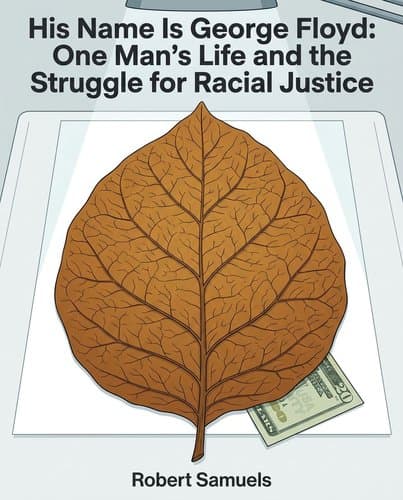
George Floyd's alleged crime in 2020 was purchasing tobacco with a counterfeit $20 bill.
The Institutions That Failed Floyd Were Succeeding at Their Actual Purpose
The institutions that shaped George Floyd's life were not broken. They were working.
Before a single student sat down to take the Texas Assessment of Academic Skills test that Floyd failed three times, the Texas Education Agency's own experts published a prediction: 73 percent of Black students would fail the math portion. The state administered the test anyway and made passing it a requirement for graduation. This was 1990. Floyd was a junior at Jack Yates Senior High School — a campus stripped of most of its experienced Black educators through a 1970 teacher-transfer policy, never racially integrated because White families voted with their feet and left, and visited by college recruiters exclusively from athletic departments. Admissions officers did not come. The message was not subtle: his body was the asset.
Floyd failed the TAAS math section three times. He did not walk at graduation. His roommate PoBoy watched him become someone else in those final weeks of spring 1993. "I think the fight really kind of got out of him when he didn't get that diploma," PoBoy said years later.
A 1999 lawsuit argued the test was racially biased. A federal judge agreed the racial disparity "must give pause to anyone looking at the numbers," then dismissed the case, deferring to Texas's right to set its own education policy. The disparity was documented, acknowledged, and preserved.
The same logic runs through Cuney Homes, the housing project where Floyd grew up. City officials chose to name it after a prominent Black politician, a deliberate move to give a segregation scheme the appearance of Black endorsement. The complex opened in 1940 as a mechanism to concentrate the city's Black working poor in one ward, while White residents built wealth through federally subsidized homeownership that barred Black applicants. It was not housing policy drifting toward injustice. It was housing policy achieving its stated goal.
The institutions around Floyd were not good systems corrupted by prejudice. They were prejudice organized into systems — documented, litigated, preserved. The government's own records listed Cuney Homes at 564 units and 99 percent Black. They contained no plan to change either number.
Derek Chauvin Did Not Become Who He Was Despite His Department — Because of It
On September 9, 2010, David Cornelius Smith went to the downtown Minneapolis YMCA to play basketball. He had a mental illness. Officers were called when he acted strangely on the court. Two officers wrestled him down, handcuffed him face-down, and one pressed his knee between Smith's shoulders for four minutes and thirty seconds. Smith cried for help, then went quiet. He died eight days later. The medical examiner ruled the cause of death mechanical asphyxiation — compression of the airway and chest under body weight.
The city cleared both officers. Then it paid Smith's family $3 million and promised to retrain officers on the maneuvers that had killed him. That promise was fulfilled in 2014 with a twenty-minute session on neck restraints and prone holds. One of the attendees that February was Derek Chauvin.
Eighteen days after that training, Chauvin used a neck restraint for the first time on record. Then again. Then again. Between 2014 and May 2020, the department's 800-plus officers collectively deployed the technique 295 times. Chauvin alone accounted for 9 of those (3 percent of the total). In the same period, Communities United Against Police Brutality tracked 3,434 complaints against Minneapolis officers. Twelve resulted in any discipline. The rate was 0.35 percent.
Chauvin collected 29 complaints over his career. His only reprimand came in 2007, after he dragged a breastfeeding mother from her car window during a traffic stop. After that, nothing — not after slapping an 11-year-old caught stealing chips, not after pinning a man's face into a puddle while he said he couldn't breathe, not after pressing his knee into a 14-year-old's upper back for 17 minutes while the boy's mother begged him four times to stop. "He's a big guy," Chauvin said of the child.
A police conduct commissioner later observed that Chauvin's behavior "continued to get worse" and that "no one in the department stopped him." She meant that as a failure. The numbers suggest something more deliberate. Twenty minutes of retraining after a wrongful-death settlement. Twenty-nine complaints over a career, one reprimand. The department had a full record on Derek Chauvin. It chose to keep him anyway.
Recovery Is Harder When the Disease Is Called America
Think of a pipe under constant pressure. What breaks it is not one extreme event but sustained pressure over time, invisible until the failure. Epidemiologist Sherman James found the human equivalent in eastern North Carolina in the 1980s when he met a sharecropper named John Henry Martin. Martin had paid off a forty-year mortgage in five years through relentless labor. By his early seventies, his body had settled the account differently: osteoporosis, stomach ulcers, high blood pressure. James named what he observed "John Henryism": the physiological cost of extreme effort against structural resistance. Studies that followed measured chronically elevated cortisol in Black Americans. Those levels strain the immune system, raise blood pressure, and accelerate the diseases that disproportionately kill Black men. Structural stress doesn't just wear people down. It rewires the body toward disease.
Floyd arrived in Minneapolis — a state that presented itself as a progressive model — and found both the promise and its limits. Minnesota ranked eighth lowest in overall drug mortality. It also had the second-highest Black-White drug death gap in the country. The synthetic opioid death rate for Black Americans rose 242 times between 2002 and 2017. When Floyd's roommate Eric Cornley (a fellow recovery program resident, former college basketball player, another life the system had used up and discarded) died of an overdose on their basement couch, Floyd covered him with a shirt and a blanket and called 911. Days later, his friend Byron Jeffrey came to cut Floyd's hair, stepped out for a chair, and returned to find Floyd standing over a mirror on his mattress beside a small jar of pills, tears running down his face.
Using the name he sometimes called himself, Floyd said, "Li'l B, I'm sorry."
That apology is not a moral verdict. It is the sound of a pressure gauge giving way.
Everything About May 25, 2020 Was Completely Ordinary — That Is the Horror
What would have needed to go differently for George Floyd to be alive on May 26?
The day ran on ordinary parts. Floyd was unemployed, as were millions of Americans in the spring of 2020. His companion Maurice Hall was a drug dealer with warrants; Floyd had tried for years to keep his distance from that world without fully managing it. The $20 bill he used at CUP Foods was counterfeit. The manager, expecting Floyd to simply come back inside, sent Christopher Martin, a teenage employee, to call 911. Martin spoke limited English; he had no idea a petty complaint in America could escalate.
Two rookie officers arrived — Lane in his fifth day of field training, Kueng in his third shift ever. Floyd panicked, visibly impaired, his terror of confined spaces and police colliding. They called for backup. Derek Chauvin arrived. His knee went to Floyd's neck.
Floyd said he could not breathe. He said it at least twenty-seven times. He called for his mother. People on the sidewalk watched him go still. Chauvin told him: "You're doing a lot of talking. Takes a heck of a lot of oxygen to say that." The officers talked among themselves about drug use and waited for the ambulance they had flagged as low-priority. Not until paramedics said "get out of the way" did Chauvin lift his knee. It was 8:29 p.m.
Within hours, the Minneapolis Police Department issued a statement:
MAN DIES AFTER MEDICAL INCIDENT DURING POLICE INTERACTION
Floyd had resisted, the department said. No weapons were involved. The release said nothing about a knee on a neck, or twenty-seven pleas for air, or the crowd that had watched a man die. When a neighbor walked to Chauvin's cruiser afterward and called him a maggot, Chauvin's reply captured the department's self-understanding: "We got to control this guy because he's a sizable guy, and it looks like he's on something." The horror of May 25, 2020 is that the killing and the explanation were both routine.
A Guilty Verdict Convicted One Officer. The System That Made Him Survived.
The verdict was real. Everything it failed to change was also real.
Guilty on all three counts arrived April 20, 2021. Chauvin was handcuffed in the courtroom. George Floyd's brother Philonise watched and thought of Super Mario jumping with his fist raised — then held himself still, because he still needed the judge for sentencing. That restraint in the moment of victory turned out to be the posture his family would hold for the next year.
Eight days after the verdict, Biden asked Congress to pass the George Floyd Justice in Policing Act by the one-year anniversary of Floyd's death. The key obstacle was qualified immunity, the doctrine shielding officers from civil suits. Biden told the Floyd family in the Oval Office: "If we didn't have that in the bill, we could get it done tomorrow." Democrats held enough Senate votes to pass it by scrapping the filibuster. They declined. The bill died.
Standing in the Oval Office before that conversation, Philonise stared at the eagle seal on the rug. Federal statutes exist specifically to protect the national bird; harming one is a prosecutable offense. He repeated one line to every reporter who approached him: "If you can make federal laws to protect the bald eagle, you can make federal laws to protect people of color." It is the book's sharpest image of the gap: protections calibrated precisely to what a country values, and what it does not.
Toshira Garraway, whose fiancé's death remained uninvestigated because the statute of limitations ran out before she found a lawyer, pulled Floyd's girlfriend Courteney Ross close after the verdict and said: "The fight's not over in Minneapolis." Then she named the only position available to people who cannot afford despair: "Optimism is our defense mechanism, a way of survival." Not hope as feeling. Hope as work that continues regardless of what the legislature does.
What a Counterfeit $20 Bill Was Actually Worth
The crop was tobacco. Floyd's ancestors worked it for wages that were stolen before they were earned. His great-grandmother left North Carolina with nothing. His alleged final crime was buying it with a counterfeit bill. That is not a metaphor the authors constructed — it is a 160-year paper trail, county by county, generation by generation. You can hold it in your hand.
A jury convicted one officer. A bill to reform the system that trained him died in the Senate. Public support for racial justice, measured in polls, had already begun to fall before Chauvin was sentenced. Toshira Garraway understood: feelings respond to outcomes. Disciplines do not. "Optimism is our defense mechanism," she said. "A way of survival."
Notable Quotes
“Floyd shouted again. Kueng and Lane stepped in. Lane held Floyd's legs. Kueng shifted his weight on Floyd's lower back and pushed away Floyd's hands. Chauvin then pulled Floyd's fingers upward and forced his wrist into an unnatural angle, causing him to writhe in pain.”
“Chauvin said, and then Floyd begged for help to someone beyond the earthly realm.”
“he shouted from beneath Chauvin's knee, with his neck cranked sideways.”
Frequently Asked Questions
- What is the main argument of 'His Name Is George Floyd'?
- The book traces George Floyd's life from his ancestors through his death to demonstrate that systemic racism operates through specific, documented policy decisions rather than vague cultural attitudes. By examining housing policy, underfunded schools, mass incarceration, and police discipline failures, authors Robert Samuels and Toluse Olorunnipa show how each mechanism is documented, dated, and attributable to named decisions. The work provides readers with a precise, evidence-based map of how these policies compound across generations to shape individual lives and outcomes.
- How does the book explain how systemic racism operates in practice?
- The book demonstrates that systemic racism operates through specific, traceable policy mechanisms—such as the 1940 design of Cuney Homes, predicted TAAS failure rates, and the Minneapolis Police Department's 0.35% discipline record—rather than diffuse cultural attitudes. Each mechanism is documented, dated, and attributable to named decisions. By providing exact dollar amounts, named people, and documented dates of specific acts of dispossession, the authors show that multigenerational wealth gaps cannot be understood without this granular specificity. Without precision, history remains abstract enough to dismiss as ancient grievance rather than compounding injury.
- What does the book say about the connection between racism and physical health?
- Medical research on John Henryism and racialized cortisol levels shows that structural stress produces measurable physiological damage in Black Americans. The book emphasizes that treating addiction as a moral failure ignores the biology of what chronic racism does to a body over a lifetime. By incorporating this scientific evidence, Samuels and Olorunnipa connect systemic policy failures directly to documented health outcomes, illustrating how oppressive structures translate into tangible, measurable harm at the biological level. This framework moves beyond abstract discussions to show concrete ways racism damages Black bodies systematically.
- Why is the distinction between individual accountability and systemic change important in this book?
- A criminal conviction of one officer and the systemic policy changes needed to prevent the next George Floyd are categorically different things. The book argues that conflating them—treating the verdict as closure—is among the most consequential errors a citizen can make when reading this story. The authors point out that Chauvin's 29 complaints with one reprimand represented visible data available to supervisors at every stage. A department's discipline record is a more reliable predictor of officer behavior than any individual officer's character, suggesting that accountability requires institutional transformation, not individual punishment alone.
Related Book Summaries

Read the full summary of 58890953_his-name-is-george-floyd on InShort