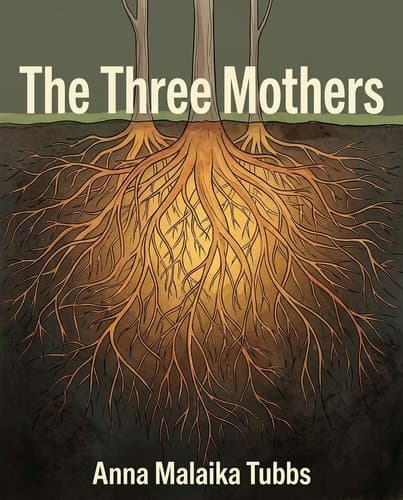
53138238_the-three-mothers
by Anna Malaika Tubbs
Behind Malcolm X, Martin Luther King Jr., and James Baldwin stood three Black mothers whose sacrifice shaped the century's defining voices for freedom—then…
In Brief
Behind Malcolm X, Martin Luther King Jr., and James Baldwin stood three Black mothers whose sacrifice shaped the century's defining voices for freedom—then history deliberately erased them. Their story reveals how the same machinery of dehumanization their sons fought was used first against the women who built them.
Key Ideas
Ask Whose Labor Made Icons Possible
When reading accounts of any social movement or intellectual tradition, actively ask whose domestic labor, teaching, and sacrifice made the named figures possible — that labor is almost always absent from the official record, and its absence is not neutral.
Stereotypes Were Strategic Weapons, Not Accidents
The controlling images used to erase Black women (mammy, matriarch, welfare queen) were not cultural accidents but strategic deployments at moments when white economic and political control felt threatened. Recognizing the strategy is the first step to resisting it.
Systems Pathologize Accurate Resistance and Harm
Louise Little's institutionalization shows how systems can pathologize resistance: her accurate perception of discrimination was literally diagnosed as delusion. The same circular logic — treating a person's response to harm as evidence of mental defect — appears in contemporary medical, legal, and educational institutions.
Maternal Disparity Reflects Systemic Devaluation
Black maternal mortality in the U.S. is 3–4 times higher than for white women regardless of income or education level. This disparity is not a health failure but a structural one: 'maternal health care operates in systems that inherently undervalue Black lives.'
Mothers Transmitted Distinct Political Inheritances
Each of the three mothers passed down a distinct political inheritance — Louise's physical courage and self-determination, Alberta's insistence on dignity and community organizing, Berdis's use of language and love as tools of survival. Reading the sons without this context is reading the branches without the roots.
Name Constraints Rather Than Normalize Them
Constrained choice is still choice, and its costs are real: Alberta Williams gave up a teaching career not by force but under the marriage bar — a constraint so normalized it didn't feel like a theft. The book asks readers to name those constraints rather than absorb them as natural.
Who Should Read This
History readers interested in World History and Social Issues who want a deeper understanding of how we got here.
The Three Mothers
By Anna Malaika Tubbs
11 min read
Why does it matter? Because history named the sons and erased the women who built them.
On Valentine's Day 2019, Anna Malaika Tubbs walked into a CVS in Washington, D.C., and discovered she was pregnant. Hours earlier she had been at a Frederick Douglass bicentennial gala. She was midway through a Cambridge PhD researching Black motherhood.
She was already studying three women who had raised the men most responsible for shaping 20th-century Black resistance — Martin Luther King Jr., James Baldwin, Malcolm X. She knew their sons' words almost by heart. What she found digging through archives was something closer to a crime: Alberta King, Berdis Baldwin, and Louise Little had been not merely overlooked but systematically erased. The same machinery of dehumanization their sons spent their lives opposing had been running quietly on the women who made them — and calling itself history.
You Know Their Sons. You're About to Meet the People Who Actually Made Them.
On Valentine's Day 2019, Anna Malaika Tubbs was in Washington, D.C., sitting through a formal gala at the Library of Congress. Later that night, after a glass of wine and a few bites of cheesecake that suddenly tasted wrong, she slipped out to a CVS with her husband. She came back holding a positive pregnancy test — joy and fear arriving at exactly the same moment. She was in her second year of a Cambridge Ph.D., spending that year on archival research. The subject of that research: Black motherhood. Specifically, the mothers of Martin Luther King Jr., James Baldwin, and Malcolm X.
That coincidence is the engine of this book. Tubbs had spent months reconstructing the lives of Alberta King, Berdis Baldwin, and Louise Little — women who had been almost entirely scrubbed from the historical record despite raising three of the most influential Black voices of the twentieth century. Standing in a CVS bathroom, suddenly about to become a Black mother herself, she understood something scholarship alone could not have given her: the fear she felt in that moment was the same fear each of these women carried, only heavier, because the world those women navigated was structured to end their children.
The three mothers were born within six years of each other. Their sons were born within five. Their lives ran in parallel for nearly a century — through two world wars, the Great Depression, the Harlem Renaissance, and police violence that was nothing new in their time. The sons became icons. The mothers became footnotes, or nothing. The Three Mothers is the case for why that erasure was not an oversight. It was a choice. What it cost us is the real story of how those men were made.
Their Erasure Was Not Incidental — It Was the Same Machinery Their Sons Gave Their Lives to Fight
What erased these three women was not neglect. It was the same machine their sons gave their lives to dismantle.
Before her face appeared on a pancake box, Nancy Green — the woman Quaker Oats hired in 1893 to portray Aunt Jemima in person — had built a life worth recording: she'd escaped slavery, traveled the country doing ministry work, and helped found one of Chicago's oldest Black Baptist churches. In 1910, her image was on 120 million boxes. But the character stamped on those boxes was Aunt Jemima — devoted, plump, incapable of her own desires, existing only to serve the white household she worked in. Quaker Oats needed that image, and maintaining it required burying the actual woman. The congregation she helped build, the communities she organized — none of that sold pancake mix. So none of it was preserved. Green was not alone in this. The same template that buried her would bury Alberta King, Berdis Baldwin, and Louise Little — women whose actual lives didn't fit what the image required.
Tubbs argues this was not a side effect. It was the function. The mammy stereotype operated as a cultural enforcement mechanism: Black women who expressed their own desires, prioritized their own children, or stepped out of deference faced punishment. Alberta King trained her church's choir and ran her household with quiet authority. Berdis Baldwin wrote letters across the world and turned her home into a gathering place for artists. Louise Little traveled alone at twenty — from Grenada to Canada — and spent her life in open defiance of state power. None of them fit the template. So none of them were recorded.
An anonymous 1904 essay by a white Southern woman described Black women as the greatest threat to the moral health of any community they lived in. She did not think of herself as extreme. She thought she was stating facts. That is Tubbs's point: it was the ambient air, not a fringe position — the atmosphere into which all three women were born and within which their contributions would disappear. The icons their sons became were built entirely on resistance to this. The mothers supplied the resistance. Then the same machine erased them for it.
Each Mother Gave Her Son a Specific Political Curriculum the History Books Never Credited
Where did Martin Luther King Jr. learn that his dignity was not negotiable? The standard answer points to Morehouse College, Thoreau's "Civil Disobedience," the Montgomery bus boycott. But all of that came later. The first lesson appeared in an Atlanta shoe store when Martin was six.
His father was told by a white clerk to move to the back. Martin Sr. refused. "We'll either buy shoes sitting here, or we won't buy shoes at all," he said, and walked out. Martin Jr. came home confused, in tears. Alberta held him and explained Jim Crow not as a natural condition of the world but as a human system, constructed and therefore breakable. Then she said the words she returned to whenever the world reminded her son of his supposed place: "You are as good as anyone."
This was not comfort. It was curriculum. And Alberta came to it by a specific route. Before she married, she held a college degree and trained as a music teacher. Then the marriage bar ended her professional life. The requirement terminated a woman's employment upon marriage and stayed on the books until the Civil Rights Act of 1964. The career she had built to educate other people's children was foreclosed. So she redirected: she tutored Martin Luther King Sr. through his schooling, ran the household at Ebenezer Baptist as a classroom, and when her son came home shaken, she explained a racial caste system with the precision of someone who had spent years preparing to teach. The loss of her career was also its redirection.
Each mother built a version of this. Louise Little kept a dictionary on the kitchen table and rotated her children through Catholic mass, Baptist services, and Hindu teachings drawn from her years in the Garvey movement, then held family discussions afterward, because she wanted them to understand faith as something people choose, not something they inherit. Her strictest discipline fell on Malcolm because he was most like her: strong-willed, relentless, and the fairest of all her children. She worried he'd absorb the world's unspoken hierarchy of skin tone, so she'd tell him to let the sun shine on him. Malcolm later wrote from prison that everything the Nation of Islam taught him about self-determination, his mother had already taught first.
Berdis Baldwin's teaching ran through language itself. James (Jimmy to his family) grew up in a household where his mother's letters to school were written so carefully that teachers passed them around the staff room. Gertrude Ayer, his first principal, credited Berdis directly. Her notes and letters, Ayer wrote, "were admired by the teachers and me," and "this talent transmitted through her is surely the basis of James' success." Jimmy spent his childhood holding one hand under a sibling and the other around a book. The precision, the controlled rage, the refusal to let a reader look away — he learned all of it from a woman who treated every sentence as if someone important would read it.
The world credited each son's formation to movements, seminaries, prison libraries. The mothers supplied the first draft.
When the State Wanted to Silence a Family, It Started With the Mother
On January 3, 1939, a physician named E.F. Hoffman wrote a letter to Michigan's probate court recommending that Louise Little be committed. She had been raising seven children alone for nearly eight years since her husband Earl was found nearly severed in two by a streetcar — an accident, the coroner said, though the Black community in Lansing called it murder. The insurance company denied her the larger of the two policies Earl had taken out, ruling his death a suicide. Welfare workers had been making uninvited visits for years, pulling her children aside to ask questions about their mother and telling them she was unwell. A man she'd started to love disappeared when she became pregnant with his child. By 1939, Louise was talking to herself, withdrawing from her children, visibly falling apart.
Hoffman listed all of this as evidence of insanity. Her depression after eight years of compounding catastrophe: a personality change. Her arguments with welfare workers who treated her with contempt: disputes with agencies. Her accurate perception that people in Lansing were hostile to her family: a delusion about discrimination. His diagnosis (a paranoid condition) secured the legal authority to seize her property, separate her eight children into foster homes, and commit her to Kalamazoo State Hospital for the next twenty-five years.
Here is the trap the mechanism built: Kalamazoo's documented treatments included wrapping patients in hot or cold wet sheets for hours, injecting arsenicals and mercury, inducing repeated insulin comas, and administering electric shocks. Tubbs notes that after years inside that environment, Louise could have developed the very symptoms the doctors had originally named, which gave the institution perpetual justification to extend her stay. The letter that opened the door cited evidence that was real. Louise was deteriorating. What Hoffman never asked — what the system had no incentive to ask — was why.
That circularity is the mechanism. You take a woman's rational responses to sustained racial violence, rename them as pathology, remove her from society, subject her to treatment that produces the symptoms you claimed to be treating, then point to those symptoms as proof she was never well. There is no exit built into that design.
Six years after Louise died in 1991, Michigan sent a "Petition for Reimbursement" to the Little family, demanding over thirteen thousand dollars for her care during the decades she had been held against her will. Her children refused. The state that had taken their mother for twenty-five years then billed the family she'd been separated from.
Tubbs does not let this sit safely in the past. The same logic — Black grief as disorder, Black self-advocacy as aggression, Black women's declining mental health as personal failure rather than society's — runs through contemporary psychiatric encounters, child welfare interventions, and courtrooms. The machinery Louise faced was not dismantled. It was updated.
They Were Asked Not to Worry — Then Made to Watch
One evening after dinner, Martin Luther King Jr. sat with his mother on the family patio in Atlanta and watched the sun go down. Alberta had spent years losing sleep while he traveled, fielding updates from his staff, dreading the phone. That night, Martin told her there was a real chance someone would try to kill him — it could happen without warning — and then he asked her not to worry.
The request was not cruel in intention. But it names the precise trap all three mothers lived inside: they were close enough to see everything and given no role except waiting. Alberta had spent his whole childhood building the foundation of his self-worth, explaining the system he would one day devote his life to dismantling. None of that preparation extended to this. Her son had outgrown the shelter she could offer, and he was asking her to pretend she didn't know it.
On April 4, 1968, Alberta and her husband drove to Ebenezer Baptist for an evening service. A stranger's car blocked them at the entrance, the driver honking, shouting something they couldn't understand. When they finally got inside and turned on the radio, they heard what Alberta had been holding at arm's length for years: Martin Luther King had been shot dead in Memphis. She wept without making a sound.
Fifteen months later, she lost her younger son A.D., Martin's brother, who drowned under circumstances that were never explained. She could not bring herself to get in the car when the call came.
Louise Little's version of this trap closes even faster. After twenty-five years inside Kalamazoo State Hospital — separated from her children, subjected to treatments designed to produce the very symptoms that justified her confinement — she finally came home in 1964. The family sat down for a meal together. Malcolm told his biographer he had blocked all thoughts of his mother from his mind just to keep moving; reunited with her, he described her as sharp, healthy, younger-looking than he'd expected. Within a year, he was shot at the Audubon Ballroom in Harlem. Louise had gotten her son back for twelve months.
Berdis Baldwin outlived James by twelve years — long enough that surviving him became its own chapter of her life. She could hear the illness in his voice by the end; a final Thanksgiving call, she said, that she knew would be their last. At his Harlem funeral she was wheeled down the aisle, weeping openly. Everyone present remembered her cries above everything else.
What Tubbs traces here is not grief in the abstract but its specific architecture: these women were never outside the danger. They were only outside its reach.
These Are Not Historical Figures — They Are a Blueprint for What Is Still Being Done
The same terms under which Alberta, Berdis, and Louise were dismissed are still operating. Black women in the United States are three to four times more likely to die from pregnancy-related causes than white women, a disparity that holds regardless of income or education. Tubbs opens the book with this fact already lodged in her body: standing in a CVS bathroom holding a positive pregnancy test, flooded with joy, and immediately afraid. That fear is not anxiety. It is accurate threat assessment.
What makes this a political emergency rather than a medical statistic is the Moynihan Report. In 1965 — the year Malcolm was shot, the year the movement was supposed to be winning — the US government published an analysis of Black poverty that placed the blame squarely on Black mothers. Daniel Patrick Moynihan argued that Black matriarchal households were dragging Black families behind. The women running those households were the problem. The document carried federal authority and shaped policy for decades.
Tubbs's counter-argument is not an essay. It is three lives. Berdis Baldwin, raising nine children alone after leaving an abusive husband, produced a writer who redefined what American literature could do. Louise Little, stripped of her children and institutionalized for twenty-five years, raised a son who built one of the most significant Black political organizations of the twentieth century while she was still locked up. Alberta King, her career foreclosed the day she married, redirected every skill she had into her children — and one of them remade the moral imagination of a nation. Moynihan's framework cannot hold any of this.
Tubbs ends with specific demands: universal income, gun restrictions, an end to cash bail. Behind each one is the same claim — what happened to these women is still happening, and still has an address. Recognizing Alberta, Berdis, and Louise is not an act of memory. It is a refusal to let the same machinery keep running.
The Root System Is Still There to See
Alberta King outlived Martin. Berdis Baldwin outlived James. Louise Little outlived Malcolm. Each woman carried that knowledge to her own grave, largely uncredited for the work that made their sons' lives — and deaths — matter. That is not a historical curiosity. It is a design — the same design that today produces maternal mortality rates three to four times higher for Black women than for white women, regardless of what those women have earned or achieved. Tubbs's question isn't really about these three mothers, though it should start there. It is about every voice you have ever admired, every movement you have drawn courage from, every idea that helped you believe the world could be otherwise. Ask who taught them that. Ask what that person sacrificed. Ask whether you know her name. You probably don't. That is where the work begins.
Notable Quotes
“Mother, there are some things I want you to know.”
“There's a chance, Mother, that someone is going to try to kill me, and it could happen without any warning at all.”
“He came closer to her side.”
Frequently Asked Questions
- What is The Three Mothers about?
- The Three Mothers recovers the lives of Louise Little, Alberta King, and Berdis Baldwin—mothers of Malcolm X, Martin Luther King Jr., and James Baldwin. Tubbs examines how their political and domestic contributions were erased from civil rights history. By recovering these narratives, the book provides readers with tools to recognize whose labor and sacrifice is systematically absent from official historical records of social movements and intellectual traditions.
- Why is The Three Mothers important?
- The Three Mothers is important because it exposes the systematic erasure of Black women's foundational work in the civil rights movement. Tubbs argues that when reading any social movement, readers must "actively ask whose domestic labor, teaching, and sacrifice made the named figures possible—that labor is almost always absent from the official record, and its absence is not neutral." Each mother passed down distinct political inheritances—Louise's physical courage, Alberta's insistence on dignity and community organizing, Berdis's use of language and love as survival tools—that shaped their sons' legacies.
- How does The Three Mothers address the controlling images used to erase Black women?
- The Three Mothers reveals that controlling images—mammy, matriarch, welfare queen—were not cultural accidents but strategic deployments at moments when white economic and political control felt threatened. Recognizing these strategies is essential to resisting their continued use. The book demonstrates how Louise Little's accurate perception of discrimination was pathologized as delusion, illustrating how systems weaponize circular logic: treating a person's response to harm as evidence of mental defect. This same mechanism persists in contemporary medical, legal, and educational institutions.
- What does The Three Mothers say about Black maternal mortality disparities?
- The Three Mothers documents that Black maternal mortality in the U.S. is 3–4 times higher than for white women, regardless of income or education level. Tubbs emphasizes this disparity is not a health failure but a structural one, arguing that "maternal health care operates in systems that inherently undervalue Black lives." By connecting the three mothers' experiences to contemporary maternal health outcomes, the book reveals how systems have historically and continue to systematically endanger Black women and their children.
Related Book Summaries


Read the full summary of 53138238_the-three-mothers on InShort