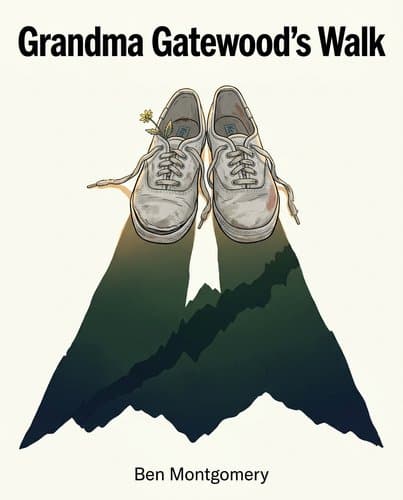
18527222_grandma-gatewood-s-walk
by Ben Montgomery
At 67, Emma Gatewood hiked 2,050 miles alone with a shower curtain for shelter—not because the Appalachian Trail was safe, but because it was safer than her…
In Brief
At 67, Emma Gatewood hiked 2,050 miles alone with a shower curtain for shelter—not because the Appalachian Trail was safe, but because it was safer than her home after thirty years of domestic abuse. Her accidental triumph rewrote who the wilderness belonged to.
Key Ideas
Necessity Breeds More Effective Minimalism
Minimalism born from necessity can be more effective than preparation born from anxiety — Emma completed 2,050 miles with gear that experts would call dangerous, partly because she had no alternative and partly because the trail's risks were smaller than the risks she had already survived
Public and Private Narratives Both Hold Truth
The reasons people give publicly for doing hard things are almost never the real reasons — Emma's 'nice lark' story served her, protected her, and was partially true; the book's lesson is that both the public and private narratives can be real simultaneously
Survival Traits Misfire in Safety
Stoicism and recklessness can look identical from the outside, and sometimes from the inside — the traits that help people survive extreme circumstances don't automatically calibrate to normal danger levels
Visible Persistence Transforms Cultural Possibility
One person's sustained, public commitment to something can shift cultural behavior more powerfully than any single book or movement — Emma's decade of visibility changed who believed the Appalachian Trail was for them
Refusal Is Sometimes Honest Self-Respect
Refusing to grant forgiveness or closure to someone who harmed you is not bitterness — sometimes it is the final, most honest act of self-respect available
Who Should Read This
Readers interested in Memoir and Resilience, looking for practical insights they can apply to their own lives.
Grandma Gatewood's Walk
By Ben Montgomery
9 min read
Why does it matter? Because the woman who saved the Appalachian Trail was running for her life.
On May 3, 1955, a 67-year-old grandmother laced up her canvas sneakers, slung a homemade denim bag over one shoulder, and walked into the Appalachian wilderness with no map, no tent, and no sleeping bag. She told reporters it was a lark. She told them she wanted fresh air. What she didn't tell them — what Ben Montgomery's meticulous biography excavates layer by careful layer — is that she had spent thirty years being beaten, controlled, and nearly strangled in her own home. The trail wasn't an adventure. It was the first place she'd ever been genuinely safe. What follows is the story of how one woman's private act of survival became a public reckoning with what ordinary human endurance actually looks like — and how a 150-pound great-grandmother in rubber-soled shoes walked into a car-obsessed, Cold War-rattled nation and quietly rewired its relationship with wildness.
She Left Georgia with Keds, False Teeth, and No Map — and That Was the Point
On the morning of May 3, 1955, a sixty-seven-year-old woman stood on the summit of Mount Oglethorpe in Georgia and looked north toward Maine. Emma Gatewood had arrived by taxi, changed into dungarees and canvas Keds behind a chicken house, and sewn herself a denim sack to carry everything she planned to use for the next two thousand miles: Vienna sausages, raisins, bouillon cubes, a shower curtain, a Swiss Army knife, and a twenty-five-cent memo book. No tent. No sleeping bag. No map. She had bunions the size of prize marbles and a mouth full of false teeth. She was five foot two and 150 pounds, and the only training she had was decades of farm labor.
The year before, Emma had tried this same walk and failed completely. She'd started from the northern end, in Maine, gotten lost within days, crushed her glasses on a rock, run out of food, and spent desperate nights in the wilderness before park rangers hauled her out. They told her to go home. She stood in a hotel mirror afterward — bruised eye, torn sweater, swollen feet — and thought she looked like a drunk from the gutter. She called herself, privately, a sixty-six-year-old failure. She told nobody any of this.
She came back the next May, alone again, and started over. When reporters eventually asked why she was doing it, she'd say it seemed like a good lark. She'd never mention the year before, or the broken teeth, or the reasons she needed to walk away from her past in the first place. She just tied her Keds, picked up her seventeen-pound sack, and headed north.
The Most Dangerous Place in Emma Gatewood's Life Was Always Indoors
P.C. Gatewood first hit his wife while she was carrying their first child, sometime around 1908. Emma was pregnant, financially dependent, and had finished school in the eighth grade. She thought about leaving him that same day. She thought about it into the night. There was simply nowhere to go. So she stayed, and over the next three decades delivered ten more children, none of whom she carried without being struck at least once.
The violence was not occasional or episodic. It was the weather inside that house. The children absorbed it as background fact: the noises at night, their mother's bruised face at breakfast, the image of P.C.'s hands at her throat until her face went dark. One of the boys once had to physically haul his father off her body so she could run. The neighbors, meanwhile, considered P.C. a man of exceptional standing — a former schoolteacher who designed buildings and quoted scripture on Sunday mornings.
Emma fled to California in 1937, mailed a letter to her two youngest daughters from an envelope with no return address, and wrote that she had suffered enough at his hands to last the next hundred years. The girls, nine and eleven, had been writing her at their father's direction, begging her to come home. They knew it was a performance. They did it anyway.
She eventually went back. In September 1939, on a farm in West Virginia, P.C. beat her badly enough to break her teeth, crack a rib, and nearly tear a mole from her ear. Her teenage son intervened. And when P.C. later returned with a lawman in tow, Emma was waiting at the door with a five-pound sack of flour, which she threw directly into her husband's face. It exploded white. The deputy arrested her.
Hold that image against the trail: the rattlesnake on Turkey Bald Mountain that struck the leg of her dungarees, the flooded rivers she waded knee-deep, the nights she spent on heated stones waiting out the cold. Those things were genuinely dangerous. They were also, compared to thirty years of domestic life, the easier version of fear. The Appalachian Trail had no return address. Nobody there knew where she was. That was the entire point.
A 67-Year-Old Grandmother Defeated Cold War Security Through Sheer Obliviousness
She was following the trail blazes when they simply stopped. It was early morning near Roanoke, Virginia, the fifty-first day of her walk, and Emma Gatewood found herself at a large wire fence with a hulking metal apparatus on the other side she didn't recognize. She did what seemed logical: she found a shorter barbed-wire section, eased through it without snagging her trousers, and kept moving. Then through another fence. Then a third. She emerged onto a gravel road, followed it to the highway, and picked up the trail again. Ordinary problem-solving.
Then a dozen young soldiers came marching toward her in formation and stopped dead.
She had wandered into Bedford AFS — a classified Air Defense Command radar station on Apple Orchard Mountain, one node in a perimeter of Cold War installations tasked with spotting Soviet aircraft before they reached American cities. The soldiers stared at her. She asked them where the Appalachian Trail was. When an officer explained she'd been supposed to take the parkway instead, that the old blazes were no longer valid, she thanked him pleasantly and walked to the gate. The guard who unlocked it had clearly been asleep. He squinted at her and asked how she'd gotten in. Through the barbed wire, she told him. Then she walked out laughing, because what else do you do when a 67-year-old grandmother in canvas sneakers has defeated a top-secret military installation by simply not knowing it was there.
Two months before Emma left Georgia, a medical convention in Los Angeles had heard testimony from doctors warning that American children were forgetting how to walk — losing muscle tone because cars had replaced legs as the basic unit of getting somewhere. Out on the trail, meanwhile, Emma was covering ten to fifteen miles a day in Keds. The country had built radar stations to watch the sky for threats it couldn't see, while the threat it had actually engineered — a population working its way toward physical uselessness — walked freely among them.
Benton MacKaye, who dreamed up the Appalachian Trail in 1921 as a refuge of wilderness from spreading cities, later published an essay envisioning a high-speed expressway cleared of pedestrians entirely. The same mind that wanted to preserve a path for walking imagined a road from which walkers would be excluded by design. By 1955, Americans owned sixty-two million vehicles. Emma owned a denim sack.
She Kept Telling Reporters It Was 'a Nice Lark.' Her Children Weren't Worried. Both Things Are Strange.
What did Emma Gatewood actually feel when she reached the top of Mount Katahdin? Not what she told the reporters, not what the headlines said — what did she feel?
She told a reporter that when she finally signed her name in the summit register, she had never felt so alone in her life. Sit with that. Not triumphant. Not vindicated. Alone. The woman who had spent 144 days turning herself into a national symbol of cheerful grandmotherly pluck — the hiking granny, the Gallipolis grandmother, the spunky great-grandma in sneakers — reached the thing she had been walking toward for five months and felt the specific loneliness that only comes when there is nobody left to perform for. The mountain was real. The accomplishment was real. The loneliness was just as real, and it occupied the same moment as both.
The performance had been polished and consistent. To Sports Illustrated's Mary Snow, camped near the base of Katahdin waiting to walk the final stretch with her, Emma delivered a neat summary of her complaints about the trail — terrible markings, shelters burned or filthy, brush to your neck, always routing you over the largest available rock. She said she would never have started if she'd known how bad it was, and then added, without a breath, that she couldn't have quit either. That's the whole of it, pressed into two sentences: it was a nightmare, and stopping was never an option. The reporters got both quotes and ran them. What they didn't press on was what the summit itself meant to the woman who reached it.
Maybe her children had the clearest view of all. Asked if they'd worried, they said no — her son Nelson didn't even know where she was, which he described as normal. 'She was just a normal person,' he said. 'Nothing extra.' Eleven children, and not one of them found five months alone in the wilderness remarkable enough to mention unprompted.
Maybe they were right. Maybe Emma Gatewood was, in the precise sense Nelson meant, nothing extra — just a woman doing what her nature required. The forest had always been the place where she wasn't performing for anyone. The summit was simply where that particular walk ended. The loneliness at the top wasn't failure. It was the point.
The River Was Chest-Deep and Moving Fast. She Tilted Her Head Back and Laughed.
Four o'clock in the afternoon, Clarendon Gorge, Vermont. The old bridge had burned long before; the replacement the trail crew built washed out in the floods from Hurricane Diane. Emma Gatewood had been sitting on the bank alone since morning, her damp clothes spread on rocks to dry, watching the water move. She had shouted into the trees for hours. Nobody came. And then, a little after four, two young men appeared down the trail — navy sailors she recognized from days earlier, both of them blistered and soaked from nine days of near-constant rain. Emma walked them to the edge. It was forty feet across and moving hard. One of the sailors tied their three waists together with parachute cord, and they stepped in.
The water climbed to their chests. Emma closed her eyes, found the riverbed with her feet, held both their hands. She couldn't look at the current — it was trying to drag her — so she tilted her chin straight up and stared at the sky. And then she laughed. Not nervously, not hysterically. Laughed, at the specific absurdity of being a sixty-seven-year-old woman roped between two strangers in a flooding river in Vermont. Steve Sargent, at seventy-nine, said the crossing still came to him in dreams: 'We were touch and go.' What neither he nor anyone else could quite account for was the laughter.
The trail produces its own category of stubbornness — push-through-it endurance that reads as courage until you realize the person can't turn it off. Emma had spent three decades refusing to be broken by something far more dangerous than any river, and the lesson she took from all of it was that stopping was never the right choice. That reflex had kept her alive in that marriage. On Baldpate Mountain weeks later, crawling on hands and knees across icy rock in sleet, half-blind behind a single fogged lens, she threw her pack across an eight-foot crevice and jumped on a bad knee because a painted sign at the bottom read GO FAST and she simply went. The gorge. The jump. Both times she made it. The question the book lets sit there unanswered is whether she understood those two things — survival instinct and recklessness — as different, or whether, after thirty years of P.C. Gatewood, she had stopped being able to tell.
She Refused to Walk the Last Few Steps to His Door
Think of a door left unopened. You walk fourteen thousand miles — roughly halfway around the earth — and when a dying man asks you to cross a single room, you turn away. That refusal, quiet as it is, tells you everything about what the walking was for.
In 1968, P.C. Gatewood was on his deathbed and sent word that he wanted Emma to stand in his doorway, just once, before he died. The man who had beaten her through eleven pregnancies, cracked her ribs, and put her in a jail cell while she threw flour in his face — that man wanted to see her. Emma, who had by then covered some fourteen thousand miles on foot since leaving him, declined. Montgomery records this without a word of comment. He doesn't need one. The arithmetic is the comment.
That refusal is the personal ledger of the story. The cultural ledger runs parallel, and it's just as striking. Between 1936 and 1969, only fifty-nine people completed the entire Appalachian Trail — fewer than two a year. Then in 1971, twenty-one finished in a single year, double the number from 1970 and more than in any year before. What preceded that spike was a decade of newspaper stories about an elderly woman in canvas sneakers emerging from the spruce with a bitten leg and a damaged knee, smiling, explaining herself with a line that lands like a closed door: after the life I have lived, this trail isn't so bad.
What she built, without intending to, was the psychological case that the trail belonged to ordinary people — anyone stubborn enough to keep moving. The same stubbornness that made her refuse to enter P.C.'s room made her finish a third thru-hike at seventy-seven, and in doing so she answered a question millions of people hadn't known they were asking: could someone like me do that? She was the proof that the answer was yes. Whether the trail saved her or she saved the trail is a question the book leaves open, and honestly, after fourteen thousand miles, it may be the wrong question. Some doors you don't open. Some you walk through five million times.
What She Was Actually Proving
Here is the thing about Emma Gatewood that the newspapers never quite got to: she didn't hike because she was brave. She hiked because she had already survived the harder thing, and the trail was simply what came after. She sang into the wind at the top, alone, and then walked back down.
Notable Quotes
“don’t know where I am.”
“Multiple times I was black and blue in a lot of places, but mostly my face,”
“I did not carry one single child that I did not get a slapping or beating during that time and several times he put me outside and told me to go. It was one grand nightmare to live with him with his maniacal temper.”
Frequently Asked Questions
- What is Grandma Gatewood's Walk about?
- Grandma Gatewood's Walk tells the true story of Emma Gatewood, a 67-year-old grandmother who in 1955 became the first woman to solo thru-hike the Appalachian Trail. The book reveals how her history of domestic abuse and iron endurance drove her to complete 2,050 miles carrying almost nothing. Author Ben Montgomery explores both her public explanation and the deeper motivations behind this quiet act of survival. The narrative demonstrates how one person's remarkable achievement can reshape a culture's understanding of human capability, particularly regarding age, gender, and what's considered possible.
- What are the key lessons from Grandma Gatewood's Walk?
- The book teaches that minimalism born from necessity can be more effective than preparation born from anxiety—Emma succeeded with gear experts considered dangerous, partly because she had no alternative and partly because the trail's risks were smaller than dangers she'd already survived. The narrative reveals how the reasons people publicly give for undertaking hard things often mask deeper truths; Emma's 'nice lark' story was partially true but concealed her real reasons. Additionally, stoicism and recklessness can appear identical, and one person's public commitment shifts culture more powerfully than any single book or movement.
- How did Emma Gatewood manage to hike the Appalachian Trail with minimal gear?
- Emma Gatewood hiked the Appalachian Trail carrying almost nothing, with gear that experts would call dangerous—yet she completed 2,050 miles successfully. Her minimalism wasn't a philosophical choice but born from necessity and lack of alternatives. More significantly, her willingness to accept risks reflected her perspective that the trail's dangers were smaller than the extreme adversities she had already endured. This demonstrates that preparation sometimes means accepting risk differently based on lived experience rather than accumulating equipment, and that surviving extreme circumstances can fundamentally reshape what seems dangerous or manageable.
- What cultural impact did Emma Gatewood's hike have?
- Emma Gatewood's decade of public visibility transformed cultural understanding of who could access and succeed on the Appalachian Trail. Her sustained commitment proved more powerful than any single book or movement in shifting behavior and expanding possibilities. As a 67-year-old grandmother, she challenged prevailing assumptions about age, gender, and human capability. The book demonstrates how quiet acts of survival, when visible to the public, can reshape entire cultures' understanding of human possibility. Emma's legacy shows how one person's perseverance and visibility can ultimately expand outdoor access and inspire others to see themselves as capable of extraordinary achievement.
Related Book Summaries


Read the full summary of 18527222_grandma-gatewood-s-walk on InShort