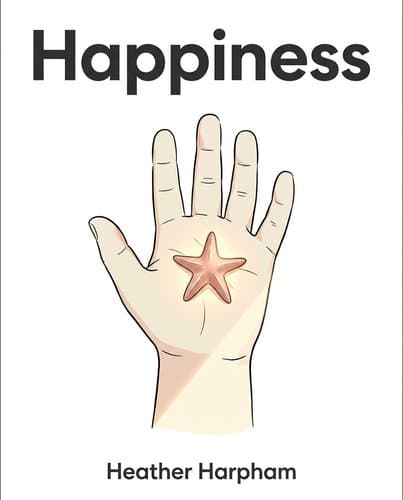
33898878_happiness
by Heather Harpham
Happiness isn't something that arrives—it's a reserve you build deliberately, fragment by fragment, so it can carry you through a child's near-death and a…
In Brief
Happiness isn't something that arrives—it's a reserve you build deliberately, fragment by fragment, so it can carry you through a child's near-death and a marriage pushed to its breaking point. Heather Harpham's memoir proves that love's truest test isn't romance, but the unglamorous, sustained choice to hold on.
Key Ideas
Crisis proves relationship strength through trials
The real test of a relationship isn't the original rupture — it's whether the relationship can carry the weight of a child's near-death. The crisis that should break you is also the only thing that can prove you.
Small forgiveness begins the healing process
Forgiveness doesn't have to be total to be real. 'Not a tidal wave — more like a capful, a thimbleful' is enough to begin with. The full amount arrives, if it does, much later.
Joy requires accepting inseparable misery
The 'joy choice' is not optimism. It's the acknowledgment that joy and misery are inseparable — 'in their boxer's clinch' — and that saying yes to one always means saying yes to both.
Choosing each other again after crisis
Extreme crisis forces each partner into their own private terror. A marriage that survives it does so not because the partners stayed connected throughout, but because they chose each other again once the worst had passed.
Actively gather happiness before crisis hits
Happiness can be deliberately gathered — catalogued in fragments, stored in reserve — as a resource to pull someone forward through the worst. This is different from waiting for it to arrive; it is making it.
Grief for others deepens joy's meaning
Survival carries guilt alongside relief, always. A child's cure is not a clean triumph — it is carried forward alongside the grief of those who didn't make it, and that weight is not a shadow on the joy but part of what makes the joy real.
Who Should Read This
Readers who connect with first-person stories about Memoir and Happiness and want to see the world through someone else's eyes.
Happiness
By Heather Harpham
10 min read
Why does it matter? Because the love story isn't the romance — it's what you discover you'll do when a child's life depends on it.
You think you know this story before it starts. Woman meets man, falls in love, gets pregnant, man hesitates, baby arrives, everything changes. A love story with the usual friction, the usual resolution. But the baby nearly dies at twenty hours old — red cells rupturing, iron flooding her bloodstream, an ambulance crossing the Golden Gate at dawn, which is not how any of this was supposed to go — and you're looking at a bilirubin number, a nurse's face arranged to say nothing, an incubator instead of a bassinet. The real question of this memoir isn't whether Brian will choose to be a father. It's whether two people can survive what's asked of them when the child they made together is fighting to survive: transfusion after transfusion, a bone marrow transplant, a ward of other children not all of whom come home. Happiness, it turns out, is less a feeling than a stockpile, gathered in stolen moments and held deliberately in reserve against the unbearable.
The Baby You Almost Lose Is the One Who Builds the Family
The ambulance driver tells Heather Harpham to ride up front. She refuses. Her daughter — less than twenty hours old, her blood quietly destroying itself from within — is in the back, sealed inside a plastic incubator, attended by paramedics who, Harpham has decided, don't really know her. So she rides in the back with one hand resting on the box as the ambulance crosses the Golden Gate Bridge at dawn. Between the black mass of the bay and a low ceiling of clouds, a thin pink line wavers — daylight, and with it the thought: nothing catastrophic can happen during business hours. Through the rear window she can see a steady streak of green. Her mother's Volvo, behind them the whole way. It occurs to her that for her mother, she is the plastic box.
Gracie is not the complication in a love story between two adults. Gracie is the love story. The New York courtship, the years of couples therapy negotiating whether to have children, the pregnancy spent alone in California with a dog as her only bedmate — all of it orbits this small creature who couldn't hold her blood cells together long enough to go home with a diagnosis.
The man who contributed the other half of her genetics is in New York. Brian Morton is a published novelist who organized his adult life around a single discipline: same desk, same hour, same dinner every night. He explained in therapy, carefully and repeatedly, that he didn't want children. Harpham knew this. She had Gracie anyway, alone. Brian didn't meet his daughter until she was several months old.
When he does, he cries. Quietly, so as not to alarm the baby. He holds her like a man who suspects he has no business doing this, and prefers her strapped to his chest in a carrier, where dropping is structurally impossible. On a hike in the hills, she grabs his glasses off his face and laughs as he stoops to retrieve them, unable to free even one hand without compromising his grip. He tucks the glasses in his pocket. She laughs anyway.
A Capful of Forgiveness Is All You Need to Begin
How much do you have to forgive someone before you can let them back in? The question assumes forgiveness is a threshold — something you either clear or don't. Harpham's answer, arrived at through one specific walk up a fire trail in Marin County with a dog and a baby strapped to her chest, is smaller and more useful: enough to take the next step, not enough to pretend you've done more than that.
Brian had been gone for months. He'd declined the sonogram appointment, missed the pregnancy, left her to navigate a NICU solo while he took notes by phone from New York. The category of harm was clear. What wasn't clear was whether he was the kind of man who harms (careless about damage, constitutionally slow to acknowledge it) or whether he had simply panicked and recovered. To find out, Harpham runs a forensic audit against her own family history. Her father: a weekend parent who remarried into five children and went tyrannical under the strain. Her mother: a woman whose last partner hit her, who drove past a teenage Harpham mid-escape, screaming that the man had lost his mind, and then kept him for two more children. Three father figures, three harms, clean sweep. The odds against any man are hard to argue with.
Against that archive, she tests Brian specifically. He goes cold when cornered. But he isn't dangerous in the ways she fears. He is, she concludes in terms just comic enough to signal she's landed somewhere real — smart, kind, funny, and Jewish, which she counts as a bonus — operating in good faith. The comedy is the tell: she's reached a livable answer, not a warm feeling she was waiting to feel.
She calls him from the trail. Her opening words amount to little more than a shrug: all right, you can come over.
That thimbleful, not absolution but enough deliberate goodwill to begin, is what the rest of the book is built on. He shows up at the mailbox holding Proust. Gracie kicks her feet.
The Joy Choice Is Not Optimism — It's a Theory About How Life Actually Works
The duress that leads her there starts in a doctor's office.
When their daughter's doctor delivers a survival statistic — transfusion-dependent patients have a 50% chance of reaching age 30 — Harpham's first instinct is to slap her for saying it aloud. Not because the number is wrong, but because named statistics have a way of becoming architecture. That night, on their deck, they run the math: a bone marrow transplant could cure Gracie, but a sibling donor is the best match, and to get one you have to risk another sick child. Odds of a new baby being both healthy and a usable match: one in four. They decide no. The door shuts.
Two weeks later, Harpham is pregnant. Plan B at hour 32, failed. When she shows Brian the test, the roles have reversed: Brian, the frightened, avoidant one when Gracie was conceived, springs up and calls it wonderful. The exact reaction Harpham had once wanted from him so badly it hurt. She stands in feral terror, holding the stick, facing the full weight of what she'd already decided against.
At the coast house, Van Morrison playing in a downstairs bedroom, Harpham separates the wise choice (no) from the joy choice (yes) and names why they can't be separated. Joy and misery come as a set. Saying yes to one is saying yes to both. This isn't optimism. Optimism would require believing the anguish might be lighter than it looks. She doesn't. She just decides their pairing is the only available reality: holding out for a yes without risk is holding out for something that doesn't exist.
The yes that follows is addressed directly to the arriving child — yes to another possibly sick baby, yes to two children under two, yes to the whole doomed mess. That yes will carry them, in time, to a transplant unit in Durham.
Shared Catastrophe Doesn't Unite You — It Isolates You, and Then You Have to Choose Each Other Anyway
The moment that makes this undeniable happens on Transplant Day, when Gabriel's cord blood, frozen since his birth and flown from Oakland on dry ice with a shipping label and a tracking number, begins flowing into Gracie through a catheter that leads directly to her heart. The procedure takes four hours. Heather and Brian stand on opposite sides of the hospital bed, both watching the pump, neither looking at the other. Not out of hostility. Out of fear: if she looks at him, she'll see her own panic reflected back, and she cannot afford that. He feels her absence. She can't spare the energy for his presence. They share the most consequential moment of their family's life in complete isolation.
The weeks after deepen it. Brian has drifted to the periphery of her attention, still recognizable but no longer quite real, because he can't prescribe lifesaving medicine or guarantee their daughter lives. Meanwhile, four children die on the ward. One morning a name she'd been reading off a door at the end of the hall is gone; the child's drawing taped below it, a crayon horse in red and blue, still flaps when she walks by. She stands outside that door for fifteen minutes, unable to ask whether that kind of loss is survivable. She rides her bike home from the memorial service crying, unsure whether the grief is for the dead children or relief for her own, or both. Gracie's cure is not triumph. It's something you carry forward alongside the irreversible fact of what happened in the adjacent rooms.
Months later, Brian names what the crisis has cost them. He tells her it feels like geography has been doing the work — that she's been somewhere else entirely for longer than he can name. She is stunned. To say such a thing, she understands, he must have been very lonely for a very long time. She tells him she loves him and means it, but feels rigid and sealed against him, wanting to reach him and unable to.
The marriage survives, barely and provisionally, because each of them, once the immediate catastrophe has passed, chooses the other deliberately. She admits she'd assumed there would be time for each other later, after, on the other side. He says he hopes she's right. Not warm. But honest. And after what they've been through, honesty is the only form of intimacy either of them has left.
When a Child Dies Fifteen Feet Away, God Has Barley Fields but Not Will
Gracie is in the backseat doing hip-hop arm jerks when the phone rings. Harpham pulls over at the edge of Duke's forest. Bruce Springsteen is on the radio. The plan was for a friend to take Gracie while Harpham went upstairs to visit Varun, the one-year-old son of Ramya and Deepak, who'd been admitted to the pediatric intensive care unit and placed on a ventilator. The friend is calling instead.
Don't come, she says. Go on home.
Harpham asks whether Deepak is with Ramya. She thanks the friend and hangs up. In the backseat Gracie is still moving her arms.
She gets out of the car, promising to stay visible, and walks into the woods. It's mid-April and everything is in full bloom, aggressively green, not caring at all. She kicks a tree until her foot goes numb. Woodpeckers drum the bark above her, red-headed, not going anywhere. She waves. They stay.
She'd been watching Varun's decline for months, the whole time Gracie was recovering, holding his last healthy image fixed in her mind.
That night, once the children are asleep, Brian holds her face in both hands while she articulates the theology she's arrived at through force of events. God, she tells him, built rivers and cell structure and every April that blooms on schedule regardless of what's happening inside the hospitals it surrounds. Not will. The universe that let Varun die while Gracie recovered isn't organized by intention. You can't argue your child survived because something wanted her to.
What she believes in instead: Deepak's palm on Ramya's back in the PICU. She'd watched them move around their son's room, brushing past each other, bending to smooth his cheek. The touch on his wife's back was casual — the kind couples make a thousand times without thinking — but also conscious, deliberate. A transmission. Ramya looked up and met it without blame. Two parents in the same hell, still choosing each other. That's what holds.
Gracie survives. But a father she'd met months earlier in a clinic hallway — his son dead of mishandled pneumonia, then his daughter diagnosed with incurable leukemia, all of Ireland raising a million dollars for her transplant — had said it plainly: Every family goes through something. He wasn't consoling anyone. He was describing the terrain. And then you go home. You pick your kid up from school. You put your hand on someone's back.
Happiness Is Not the Reward for Surviving — It's What You Trip Over on the Way Somewhere Else
Harpham offers two incompatible theories of happiness. She refuses to choose between them. That refusal is the book's most honest gesture.
The first surfaces in Chapter 34, the stolen day at the ranch before the transplant begins. After Gracie rides a sway-backed Palomino through the dust, Harpham lies in a king-size bed with both children against her and decides this joy is something to bank — not to celebrate but to draw against later, when things go from bad to unbearable. She begins cataloguing what Gracie loves: ice cream, the geese, the Thanksgiving kite that landed in unexpected North Carolina snow. Happiness as deliberate accumulation, as ammunition against a future she knows is coming.
The Coda, eleven years later, proposes the opposite. Gracie is fourteen with starfish-shaped scars she doesn't bother hiding. Gabriel is twelve with Beatles bangs, still measuring love by its extremity — would they die for him, and how badly? The family is doing laundry, arguing about who gets enough time to write, driving to acting class. And Harpham's conclusion: happiness doesn't come as a reward for surviving — it catches you by accident on the way somewhere else.
Neither theory cancels the other. You need both — deliberate accumulation and surrender to accident — because suffering demands preparation and is unpredictable enough to make preparation insufficient. At the summer camp farewell, Harpham shouts "Happiness" as her children crest the hill with their giant packs. They're already on the other side. They don't pause to receive it.
What the Starfish Scars Tell You
After everything — the incubator, the transplant, the adjacent rooms where other children died — this is what happiness actually looks like. Not a conclusion you arrive at. Not the reward waiting past the worst of it. Something you stumble into while you're already on your way somewhere else, carrying your scars in plain sight because you forgot to be ashamed of them.
The scars are blush-pink and shaped like starfish, and Gracie, at fourteen, doesn't bother finding a swimsuit to hide them. This is not a statement. She just has somewhere to be. A hill to crest with a pack the size of her torso, a whole summer ahead, parents shouting something from below that she's already too far up the path to hear clearly. She doesn't pause. She doesn't look back.
Notable Quotes
“Bobbie, your machine's too loud for my pony,”
“She likes to sleep in dust puddles.”
“Bobbie's doing her work, sweetie,”
Frequently Asked Questions
- What is Happiness by Heather Harpham about?
- Happiness is a memoir about building joy deliberately as a reserve against catastrophe. Harpham traces her journey through a child's life-threatening illness and a marriage's fracture, exploring how love proves itself through sustained endurance rather than romance. The book reframes happiness not as a final state to achieve but as something you "gather and store against the worst." Through these personal crises, Harpham demonstrates how the most challenging moments can paradoxically prove the strength of relationships, revealing that survival and recovery involve both relief and guilt, joy and grief intertwined.
- What are the key takeaways from Happiness by Heather Harpham?
- Harpham's memoir emphasizes that relationships are tested not by their initial breaking but by their ability to carry profound weight. She argues that forgiveness need not be total: "Not a tidal wave — more like a capful, a thimbleful" suffices initially. The "joy choice" rejects optimism, instead acknowledging that joy and misery exist "in their boxer's clinch." Crucially, marriages survive crises not through continuous connection but by choosing each other again afterward. Happiness itself becomes a deliberate practice—catalogued fragments stored as reserves. Finally, survival inherently mingles relief with guilt, making joy real precisely because it carries the weight of loss.
- How does Heather Harpham define happiness in her memoir?
- Harpham redefines happiness as something deliberately gathered rather than passively awaited. Her definition rejects traditional notions of happiness as a permanent achievement or optimistic state. Instead, happiness is understood as inseparable from suffering—"in their boxer's clinch"—making the choice for joy also a choice for potential pain. She frames happiness as fragments consciously catalogued and stored in reserve, a deliberate resource for endurance. This definition emerges through her experience of crisis: happiness becomes meaningful precisely because it's forged through grief, loss, and the weight of survival. It's not a destination but an active practice of gathering moments against catastrophe.
- Is Happiness by Heather Harpham worth reading?
- Happiness offers profound insights into how love sustains through catastrophe, making it valuable for anyone navigating relationship crises or personal loss. Harpham's raw exploration of a child's life-threatening illness and a marriage's rupture demonstrates how the worst moments can paradoxically strengthen bonds. Her redefinition of happiness—not as an optimistic state but as deliberately gathered reserves against suffering—provides practical wisdom. The memoir's eloquent articulation of forgiveness, guilt, and survival resonates deeply. If you seek honest reflection on how relationships endure extreme hardship and how joy coexists with grief, this memoir delivers transformative perspective backed by lived experience and lyrical prose.
Related Book Summaries

Read the full summary of 33898878_happiness on InShort